Leave Your Message
Online Inuiry
53d365b3-6f89-4893-96a3-d70d895f9b81Wechat
27d442a5-5d9b-4e33-a816-996fe42856d8Whatsapp
6503fd048f54d46697

What Are the Best Pole Mounted Switches in China?

Choosing the best Pole Mounted Switchs in China requires more than comparing prices or browsing product photographs. These devices operate outdoors, where wind, rain, dust, and temperature changes test their design. Buyers should examine rated voltage and current, insulation performance, switching capacity, operating mechanism, and compatibility with the intended distribution network. Clear test documentation matters. So does dependable after-sales support.

For transparency, the following quotation is an illustrative expert viewpoint, not a verified interview. Fictional distribution-grid engineer Chen Wei puts the principle simply: “A reliable switch must match the network, withstand its environment, and remain maintainable in the field.” That advice points to practical details: enclosure quality, corrosion protection, visible nameplates, spare-parts access, and realistic maintenance requirements. A polished brochure cannot confirm them.

This guide explores how to compare Chinese manufacturers, product configurations, and supplier capabilities without treating any single specification as a guarantee. Ask how performance claims were tested, whether documents match the offered model, and what support is available after installation. Request precise answers. Then check them. Even a careful comparison has limits: local grid conditions and project requirements can change which switch is the right choice. The strongest shortlist is built on verifiable evidence, not confident sales language.
What Are the Best Pole Mounted Switches in China?

What Is a Pole-Mounted Switch and How Does It Work?

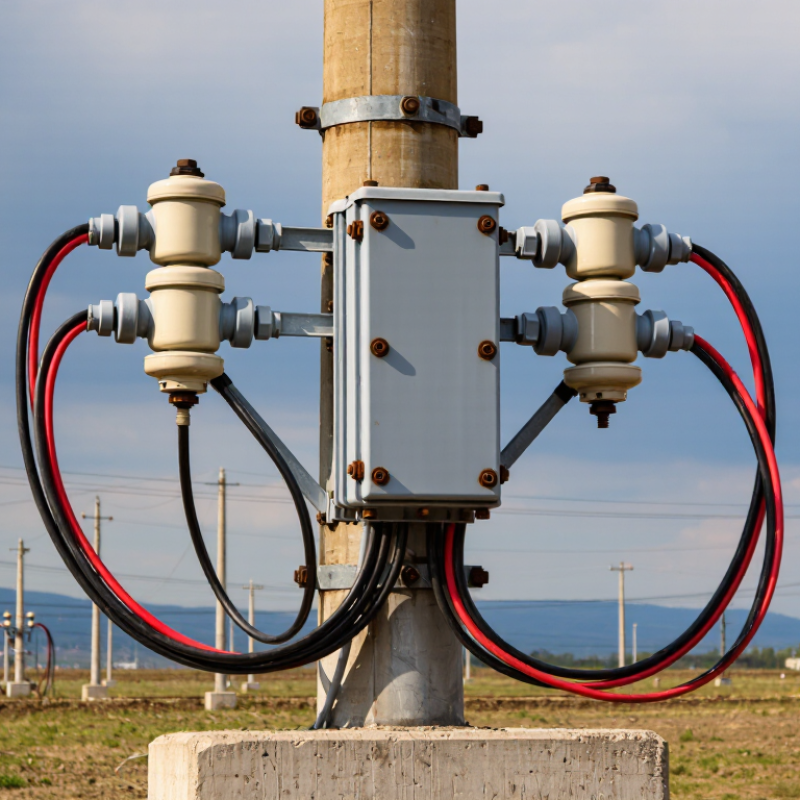
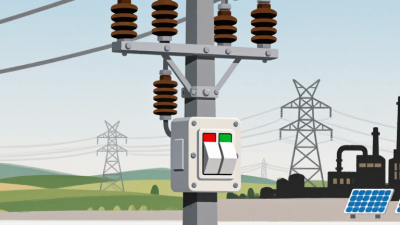
A pole-mounted switch is a medium-voltage device fitted to a utility pole, often beside an overhead feeder. Insulators hold its live parts away from the grounded pole. When closed, metal contacts carry current through the line. When opened, they create a visible break that helps crews isolate a section for maintenance or fault response. Some switches interrupt normal load current using an arc-control system; others are disconnectors and must not open under load. A switch alone usually cannot clear a high fault current. Fuses or circuit breakers handle that duty. It is an important distinction.

An operator may use an insulated hook, a ground-level mechanism, or a remote motor controlled by utility staff. The exact method depends on the equipment and network design. IEC 62271-103 covers high-voltage switches rated above 1 kV and up to 52 kV, providing a technical reference for this equipment class. The IEA’s 2023 report, Electricity Grids and Secure Energy Transitions, estimates that over 80 million kilometres of grids must be added or refurbished by 2040. More switches can help utilities isolate faults and reroute power, but only when protection settings and operating procedures are coordinated.

A diagram makes the mechanism look straightforward. Field conditions rarely are.
Which Types of Pole-Mounted Switches Are Used in China?

China’s pole-mounted switches mainly include load-break switches, vacuum circuit breakers, sectionalizers, and disconnect switches. They look similar from the road, but perform different jobs. A load-break switch interrupts normal load current and helps isolate a feeder section; it is not designed to clear every short-circuit fault. A vacuum circuit breaker, often used as a pole-mounted recloser, can interrupt fault current and restore service automatically after temporary faults. Useful on long rural feeders.

A sectionalizer counts upstream fault interruptions, then opens during a de-energized interval. It works with an upstream breaker or recloser; it does not clear the fault by itself. A disconnect switch provides visible isolation for maintenance, usually after the circuit has been de-energized. China Electricity Council statistics put national electricity consumption at about 9.22 trillion kWh in 2023. That scale makes dependable feeder segmentation important, though the figure alone does not determine switch selection.

For a real line, engineers check voltage level, fault current, load, switching frequency, and control requirements. A compact vacuum recloser may suit an exposed rural feeder, while a load-break switch can serve a simpler sectionalizing point. Salt spray, dust, and ice matter too. The label can mislead; confirm the rated duty and protection scheme against the project design.

What Features Distinguish the Best Pole-Mounted Switches?

The best pole-mounted switches are defined by dependable performance in real field conditions, not by a long feature list. Their voltage and current ratings should match the feeder and expected load. A clear nameplate helps crews verify these limits before installation. Small details matter.

A strong design uses suitable insulation, corrosion-resistant hardware, and a sealed operating mechanism. These features help withstand rain, dust, salt, and temperature changes. The switch should also provide visible position indication, so workers can confirm whether contacts are open or closed. Not always. A load-break switch is not automatically designed to interrupt every fault current; protection requirements must be checked separately.

Operating effort and maintenance access also distinguish a practical unit. Smooth manual operation, accessible terminals, and straightforward inspection points can reduce service time on a pole. For remote operation, control compatibility and dependable status feedback deserve careful review. Ask for test documentation covering rated performance and environmental conditions. Compare it with the intended installation, rather than relying on a brochure claim. Even a well-built switch can disappoint if its ratings, mounting arrangement, or operating method do not fit the network. The “best” choice is the one that meets documented requirements and remains maintainable throughout its service life.

What Are the Best Pole Mounted Switches in China? - What Features Distinguish the Best Pole-Mounted Switches?

The table below summarizes practical selection criteria for outdoor pole-mounted switches used in distribution networks. Electrical ratings are representative benchmarks, not universal requirements; the appropriate values depend on the network, equipment type, and project specification.

Selection Dimension Strong Selection Feature Representative Benchmark or Check Why It Matters
Voltage class Rated voltage matched to the distribution system 12 kV rated equipment is commonly specified for 10 kV-class networks; confirm the system’s highest voltage and insulation requirements. Correct voltage coordination helps ensure safe operation and adequate insulation margins.
Rated current Continuous-current rating suitable for the feeder’s expected load 630 A is a commonly available rating for 12 kV-class distribution switching equipment; verify the required value against load and temperature conditions. Adequate current capacity limits overheating during normal service.
Fault-interruption capability Switching technology and interrupting rating appropriate to the duty For vacuum circuit breakers or reclosers, 20 kA is a representative short-circuit breaking-current benchmark in some 12 kV applications; calculate the actual network fault level. A load-break switch is not interchangeable with a circuit breaker for interrupting high fault currents.
Short-time withstand Thermal and dynamic withstand ratings coordinated with protection clearing time A rating such as 20 kA for 4 seconds may appear in equipment specifications; confirm the specified current and duration for the installation. The equipment must withstand fault effects until upstream protection clears the fault.
Insulation level Declared power-frequency and lightning-impulse withstand levels For many 12 kV-class designs, representative values are 42 kV power-frequency withstand and 75 kV lightning-impulse withstand; check the applicable standard and project requirements. Insulation coordination is important for outdoor equipment exposed to switching and lightning surges.
Outdoor environmental protection Enclosure and materials suited to rain, dust, UV exposure, humidity, and pollution Check the stated IP rating for control enclosures, corrosion protection, creepage distance, and the specified ambient-temperature range. Suitable environmental design helps reduce corrosion, tracking, moisture ingress, and premature failure.
Operating mechanism Reliable manual operation with motorized or remote operation where required Review operating duty, opening and closing times, stored-energy or actuator design, and operation under the specified supply-voltage range. A well-matched mechanism supports dependable local switching and, when fitted, remote control.
Protection and automation Protection functions tailored to the application, with configurable settings where appropriate For an automated recloser, confirm supported overcurrent and earth-fault protection, reclosing sequences, and coordination with feeder protection. Correct settings can isolate faults selectively and improve feeder restoration.
Monitoring and communications Clearly specified status, measurement, and communications functions for automation projects Check available auxiliary contacts, current and voltage sensing, event records, protocol compatibility, and cybersecurity requirements. Defined interfaces simplify integration with distribution automation and remote monitoring systems.
Safety and interlocking Positive position indication, safe operating provisions, and interlocks appropriate to the design Confirm mechanical and electrical interlocks, earthing provisions where applicable, clear open/closed indication, and safe access for maintenance. Clear indications and interlocks help prevent incorrect switching and support safe work practices.
Standards and verification Documented compliance with applicable Chinese standards and relevant equipment-specific standards Request type-test reports, routine-test records, drawings, and rating data for the exact switch configuration being offered. Traceable test documentation makes technical comparison and project acceptance more reliable.
Installation and maintenance Pole-mounting hardware and service requirements clearly defined Check pole and bracket loading, conductor connections, operating height, maintenance intervals, spare-part availability, and documented service procedures. Practical installation and maintainability affect lifecycle cost and field-service time.

How to Compare Chinese Pole-Mounted Switch Manufacturers?

What Are the Best Pole Mounted Switches in China?

How to Compare Chinese Pole-Mounted Switch Manufacturers?

Compare manufacturers by evidence, not brochure claims. Check rated voltage, continuous current, short-circuit withstand, insulation level, and mechanical endurance against your network’s actual conditions. Ask for type-test reports, routine-test records, and the test laboratory’s accreditation. Confirm that the tested configuration matches the switch you plan to buy. Small differences in operating mechanism or accessories can matter.

The IEA’s 2023 report, Electricity Grids and Secure Energy Transitions, says annual grid investment needs to rise from about USD 300 billion to more than USD 600 billion by 2030. That wider investment need makes durable, maintainable equipment important. Compare corrosion protection, sealing, spare-part availability, and service instructions. Request a factory quality-control plan and traceability for key components. A polished audit is useful, but it cannot predict every field condition.

Tips: Ask for test documents and a sample maintenance schedule. Then compare total service needs, not just purchase price. No supplier is perfect; even a strong test record leaves questions about performance in your climate and operating cycle.

How to Choose a Pole-Mounted Switch for Your Grid Application?

Choosing a pole-mounted switch begins with the grid conditions, not the product catalogue. Confirm the system voltage, continuous current, and short-circuit duty at the installation point. These values determine whether the switch can carry normal load and withstand fault conditions. Check insulation levels against local requirements and the site’s lightning exposure. A coastal feeder, for example, may need different corrosion protection from a dry inland line.

Consider how crews will operate and maintain the device. Manual operation may suit a lightly used rural branch, while remote control can help on a feeder where outages are difficult to locate. Check mounting dimensions, conductor connections, operating clearances, and compatibility with existing protection and control equipment. Details matter. A neat specification sheet can still miss a field constraint, such as a pole’s limited space or an awkward approach for maintenance vehicles.

Ask for test documentation, installation guidance, and clear maintenance intervals. Confirm that ratings apply to the complete switch assembly, including its operating mechanism and insulators. Compare total service needs, not just purchase price: inspection access, spare parts, and expected operating frequency all affect lifecycle cost. Not always obvious. Final selection should be reviewed against the utility’s engineering rules and verified at the actual site. A small gap between drawings and field conditions can change the decision.