Leave Your Message
Online Inuiry
53d365b3-6f89-4893-96a3-d70d895f9b81Wechat
27d442a5-5d9b-4e33-a816-996fe42856d8Whatsapp
6503fd048f54d46697

China Best Pole Mounted Switches for Global Buyers

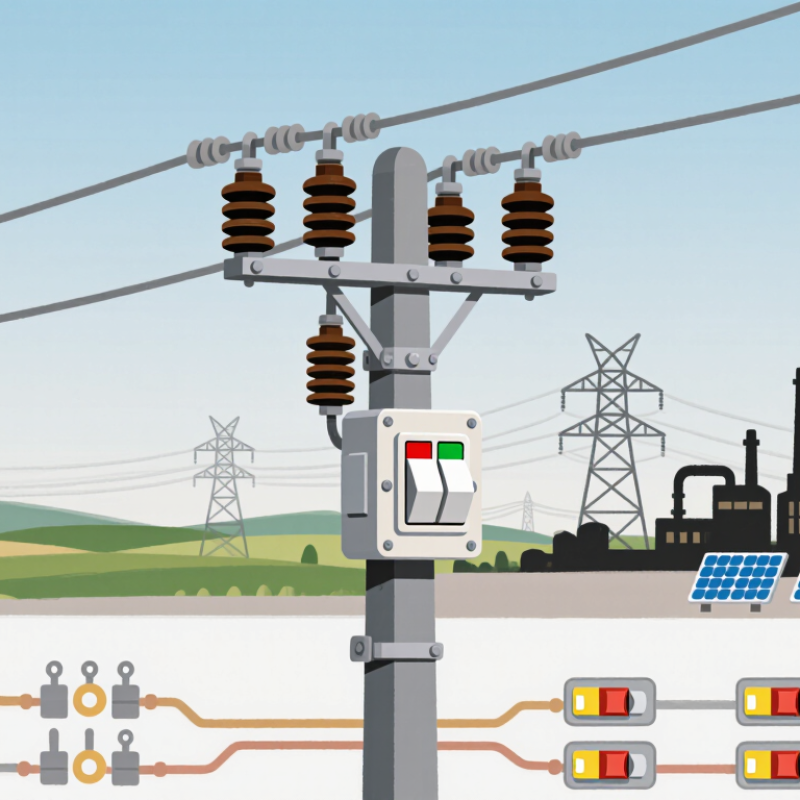
For global buyers, selecting reliable pole-mounted switching equipment requires more than comparing catalog prices. Pole Mounted Switchs support safer and more flexible power distribution across rural feeders, industrial parks, renewable energy sites, and utility networks. Their performance affects outage response, maintenance planning, and long-term grid stability.

China has become a significant manufacturing base for these products. Experienced suppliers offer load-break switches, disconnectors, fuse switches, and motorized outdoor models. Buyers should examine rated voltage, current capacity, insulation level, short-circuit performance, and operating temperature. Product drawings must match the actual pole structure, conductor arrangement, and installation space. Small mismatches can create expensive field delays.

Reliable sourcing depends on evidence, not attractive claims. Request type-test reports, routine inspection records, material details, and clear factory quality procedures. Check whether the supplier understands IEC requirements and the destination market’s utility practices. Factory audits can reveal practical details, such as enclosure finishing, terminal protection, and packing quality. These details matter during humid transport and remote installation.

A capable manufacturer should explain contact materials, arc-control design, corrosion resistance, and operating mechanisms in plain language. After-sales support also deserves attention. Spare parts, wiring diagrams, installation guidance, and response time can determine whether a fault is resolved quickly. Some suppliers may provide impressive specifications but limited engineering support. That weakness is easy to overlook.

The best choice is not always the lowest quotation. It is the switch that fits the network, survives local conditions, and remains serviceable for years. Buyers should compare verified performance, delivery consistency, customization ability, and total ownership cost. Even a careful evaluation may miss something. Therefore, independent inspection and pilot orders remain sensible steps before large-scale procurement.
China Best Pole Mounted Switches for Global Buyers

What Are Pole-Mounted Switches and How Do They Work?

China Best Pole Mounted Switches for Global Buyers

What Are Pole-Mounted Switches and How Do They Work?

Pole-mounted switches are outdoor medium-voltage devices installed on distribution poles. They isolate faults, divide feeder sections, and support safer maintenance. A load-break model can interrupt normal current, while a disconnector usually operates after the circuit is de-energized. Some automatic versions detect faults and open or reclose without immediate crew intervention.

The operating sequence is practical. A controller receives a local or remote command, moves the mechanism, and changes the contact position. Insulators maintain clearance from the pole and nearby conductors. Arc-control technology, including vacuum or air-based designs, helps extinguish electrical arcs. IEC 62271-103 provides a key reference for high-voltage AC switches, but local grid rules still matter.

The scale of need is substantial. The IEA’s Electricity Grids and Secure Energy Transitions report states that global grid investment must rise from about 600 billion dollars annually to over one trillion dollars by 2030. It also estimates that 80 million kilometres of grids require additions or upgrades by 2040. For buyers, selection should cover voltage, rated current, short-circuit withstand, altitude, pollution level, control power, and testing documents. A low price can look attractive. It may hide weak corrosion protection or difficult spare-parts access. There is no universal best switch. Field conditions often challenge a clean datasheet.


Which Pole-Mounted Switch Types Suit Different Grid Applications?

Choosing the right pole-mounted switch starts with the grid duty, not the catalog photo. Load-break switches suit rural medium-voltage feeders with routine switching and moderate load currents. They provide visible isolation and safer maintenance. Disconnectors are simpler and cheaper, but they should not interrupt load current. Confirm this point carefully.

Reclosers fit overhead feeders exposed to temporary faults, such as branches, lightning, and animal contact. They open, test, and reclose automatically. Sectionalizers work with upstream reclosers. They isolate permanent fault sections after counting operations. For urban feeders, ring networks, and industrial sites, motorized switches with remote control can reduce patrol time. IEC 62271-103 remains a useful reference for high-voltage switch requirements and test conditions.

The wider grid is becoming less predictable. The IEA Electricity 2024 report forecasts average global electricity-demand growth of about 4% annually from 2024 to 2026. Ember’s Global Electricity Review 2024 records 23% solar-generation growth in 2023. More distributed generation can create reverse power flows and changing fault levels. Therefore, China-based suppliers should offer load-break, recloser, and sectionalizing options with clear ratings, control protocols, and altitude data. A practical warning remains: many buyers select voltage first and fault duty later. That mistake can become expensive. Not always obvious. Examine short-circuit current, switching frequency, insulation coordination, and communications before approval.

How Are China’s Pole-Mounted Switches Designed and Manufactured?

China Best Pole Mounted Switches for Global Buyers

How Are China’s Pole-Mounted Switches Designed and Manufactured?

China’s pole-mounted switches are designed around safety, outdoor durability, and simple field operation. Engineers begin with the rated voltage, current, fault level, and local climate. Coastal projects need stronger corrosion protection. Cold regions need flexible seals and reliable lubricants. The pole bracket must carry wind, vibration, and equipment weight without distortion.

Manufacturing usually starts with laser-cut steel parts or precision cast components. Contact surfaces receive controlled plating for stable conductivity. Polymer insulators are molded and checked for cracks, voids, and surface defects. A sealed housing protects the operating mechanism from rain, dust, and insects. Manual handles, motor drives, and position indicators are matched to the utility’s control system. Small details matter. A poorly aligned linkage can create heat and uneven contact pressure.

Factory inspection is more than visual checking. Technicians measure contact resistance, insulation performance, mechanical endurance, and closing speed. They also inspect torque values on critical fasteners. Sample units may face simulated rain, temperature changes, and repeated switching cycles. In field inspections, loose hardware remains a common concern. It is not always a design failure. Installation practice can be the weak point. Better suppliers provide clear drawings, traceable test records, and practical maintenance instructions. No design is perfect. Feedback from installers should return to production, even when the original specification appears complete.

China Best Pole Mounted Switches for Global Buyers - How Are China’s Pole-Mounted Switches Designed and Manufactured?

Design and Manufacturing Dimension Typical Industry Specification or Practice How It Is Designed and Manufactured Buyer Verification Point
Primary Application Medium-voltage overhead distribution networks, feeder sectionalizing, load switching, and fault isolation The switch is configured for installation on a utility pole and coordinated with the network voltage, load current, protection system, and operating method. Confirm the intended network function: disconnector, load-break switch, automatic recloser, or sectionalizer.
Rated Voltage Common medium-voltage classes include 12 kV, 15 kV, 24 kV, and 36 kV, depending on the electrical system Insulation clearances, creepage distance, bushing design, and enclosure insulation are selected for the required system voltage and environmental conditions. Request the rated voltage, highest voltage for equipment, power-frequency withstand voltage, and lightning impulse withstand voltage.
Rated Current Typical distribution switch ratings are approximately 200 A to 630 A; higher ratings are available for specific networks Conductor cross-section, contact geometry, terminal size, and heat dissipation are selected to limit temperature rise during continuous operation. Check the continuous current rating against the feeder load and verify the specified temperature-rise limit.
Switching Technology Air-break, vacuum, or SF6-insulated designs may be used, subject to voltage, load, and environmental requirements The selected interrupting medium determines the contact structure, arc-control system, operating mechanism, sealing method, and maintenance requirements. Verify the switching duty, fault-interruption capability, environmental restrictions, and applicable type-test evidence.
Insulation System Porcelain or polymeric insulators are commonly used; silicone-rubber housings are widely applied in outdoor equipment Insulators are selected for mechanical strength, creepage distance, pollution performance, ultraviolet exposure, and moisture resistance. Confirm creepage distance, pollution-class suitability, hydrophobic performance where applicable, and material test documentation.
Outdoor Enclosure and Sealing Weather-resistant metal or composite housings are designed to protect operating and control components Sheet metal is cut, formed, welded, treated against corrosion, and finished with a durable coating; gaskets and cable entries are fitted to reduce water and dust ingress. Review the declared enclosure protection level, corrosion-protection system, drainage design, and sealing inspection records.
Operating Mechanism Manual, motor-operated, spring-operated, or remote-controlled mechanisms may be specified Mechanism parts are machined or formed, assembled with calibrated springs and linkages, and adjusted to provide reliable opening and closing travel. Check operating time, manual override, anti-pumping function, position indication, and the number of mechanical operations tested.
Control and Communication Local controls may be combined with remote terminal units, fault indicators, current sensors, or communication interfaces Low-voltage control wiring is separated from medium-voltage parts, labeled, terminated, and function-tested before shipment. Confirm auxiliary voltage, wiring diagram, input/output list, communication protocol, and electromagnetic-compatibility requirements.
Pole-Mounting Structure Hot-dip galvanized steel brackets, crossarms, clamps, and hardware are commonly used for outdoor mounting The support assembly is engineered for equipment weight, wind loading, conductor forces, vibration, and the pole type used by the purchaser. Confirm pole diameter range, mounting-hole pattern, structural load calculation, hardware material, and installation clearances.
Current-Carrying Contacts Copper or copper-alloy conductors with silver-plated or equivalent contact surfaces are commonly used Contact pressure, alignment, surface finish, and contact resistance are controlled during assembly to reduce heating and electrical wear. Request contact-resistance limits, plating requirements, torque values, and routine-test results.
Manufacturing Process Engineering review, incoming inspection, machining, fabrication, surface treatment, assembly, wiring, calibration, and final testing Production typically follows controlled drawings, bills of materials, work instructions, traceability procedures, and documented inspection checkpoints. Evaluate process control, material certificates, calibration records, change-control procedures, and production traceability.
Routine Testing Common checks include insulation tests, power-frequency withstand tests, contact-resistance measurement, mechanical operation, and control-function verification Each completed unit is inspected and electrically or mechanically tested according to the approved design and relevant international or local standard. Obtain a signed routine-test report matched to the equipment serial or project identification.
Type and Design Verification May include temperature-rise, dielectric, short-time withstand, switching, mechanical endurance, ingress, and environmental tests A representative design is tested to demonstrate performance under specified electrical, mechanical, and environmental conditions before series production. Check that test reports cover the same voltage class, current rating, construction, and operating mechanism as the offered model.
Applicable Standards IEC 62271 series is widely used for high-voltage switchgear and controlgear; IEEE and regional standards may also apply Design calculations, testing, labeling, and documentation are aligned with the standard specified in the purchase contract and destination market. Specify one governing standard and confirm any local utility, grid-code, or certification requirements before production.
Export Packaging and Documentation Moisture-resistant packaging, shock protection, lifting instructions, wiring diagrams, installation manuals, and test certificates are normally required The finished switch is protected against transport vibration and corrosion risk, then packed with identification labels and project documentation. Confirm packing dimensions, gross weight, spare-parts list, customs documents, installation instructions, and storage conditions.
Note: The listed ratings and practices are typical industry ranges and should be confirmed against the purchaser’s network voltage, operating duty, environmental conditions, applicable standards, and approved technical specification.

How Can Global Buyers Evaluate Chinese Suppliers and Standards?

Global buyers should evaluate Chinese pole mounted switch suppliers through evidence, not attractive catalogs. A polished catalog is not proof. Request the exact model, rated voltage, continuous current, short-time withstand current, and operating temperature. Check whether the design follows relevant IEC standards and applicable Chinese GB standards. The supplier should explain any differences clearly.

Ask for type-test reports from an independent, accredited laboratory. Review test dates, sample specifications, test voltage, mechanical endurance, and short-circuit performance. Routine test records should match each shipment. Factory audits also matter. Inspect contact materials, galvanized steel thickness, sealing points, and wiring quality. Small details often reveal production discipline.

An experienced buyer should request a production sample before placing a large order. Operate it repeatedly. Measure closing force and inspect the earthing connection. Confirm outdoor protection, UV resistance, creepage distance, and corrosion treatment for the target climate. Traceable serial numbers are valuable. So are clear drawings.

Do not rely on certificates alone. Some documents may be outdated, incomplete, or unrelated to the supplied configuration. That is easy to miss. Ask who performs final inspection and how failed units are controlled. A video call can help, but it cannot replace physical verification. I would also compare two suppliers using the same technical checklist. Price may expose a weakness, yet an expensive offer can still hide one. Supplier evaluation should remain practical, documented, and slightly skeptical.

How Should Buyers Compare Price, Customization, Delivery, and Support?

For global buyers, comparing China-based pole mounted switches requires more than a low quotation. A reliable review starts with rated voltage, current, fault withstand, enclosure protection, and tested operating life. Ask for routine test records and independent reports when the application is critical. Price matters. Yet the cheapest unit may create higher installation costs through weak terminals, unclear drawings, or difficult spare-part access. Compare total landed cost, including packaging, inspection, freight, duties, commissioning guidance, and replacement parts.

Customization should be specific, not just “available.” Confirm pole dimensions, mounting brackets, cable interfaces, control voltage, corrosion protection, and communication options. Request a drawing before production. One small mismatch can delay a crew waiting beside a truck. Delivery promises also need evidence. Review production capacity, lead-time milestones, packing photos, and the supplier’s response to previous delays. In my experience, support quality becomes visible after the order, when a wiring question arrives at midnight. A clear escalation path, spare-parts list, manuals, and remote commissioning support can protect the project. Still, no supplier is perfect; vague requirements from the buyer can cause avoidable changes.

Tips: Compare three written quotations using the same specification. Check sample labels, terminal layouts, and inspection points. Keep every promise in the contract. Ask who answers technical questions after shipment. Test communication speed before placing a large order.

China Best Pole Mounted Switches for Global Buyers

How Should Buyers Compare Price, Customization, Delivery, and Support?

How to read this chart: The evaluation scores use a 100-point procurement scorecard. Price is important, but customization, delivery reliability, and after-sales support should also be verified before selecting a pole mounted switch supplier. Buyers can adjust the weighting according to project voltage, climate, certification, and installation requirements.