Leave Your Message
Online Inuiry
53d365b3-6f89-4893-96a3-d70d895f9b81Wechat
27d442a5-5d9b-4e33-a816-996fe42856d8Whatsapp
6503fd048f54d46697

Why Choose High Voltage Switchgears?

High Voltage Switchgears help control, protect, and isolate equipment in power systems where faults can carry serious consequences. Their value is practical: a well-selected breaker can interrupt fault current, while protective relays help limit damage and support safer maintenance. The right choice depends on operating voltage, fault levels, site conditions, and the needs of the wider network. It is not a one-size-fits-all decision.

The International Energy Agency’s Electricity Grids and Secure Energy Transitions report (2023) estimates that annual grid investment must rise from about USD 300 billion to more than USD 600 billion by 2030 in its net-zero pathway. That figure reflects the scale of grid upgrades required; it is not a switchgear market forecast. As utilities and industrial operators modernize substations, equipment selection affects reliability, maintainability, and future expansion. Details matter. Engineers should compare insulation type, rated breaking capacity, switching duty, environmental exposure, and available service support. IEC 62271 standards provide an important technical framework for high-voltage switchgear, but compliance alone does not guarantee a suitable installation. A specification may look strong on paper and still miss a site’s real operating needs. That deserves careful review. This guide examines why organizations choose High Voltage Switchgears, what performance factors matter, and which trade-offs deserve attention before procurement. The goal is a clearer decision, grounded in engineering requirements rather than broad claims.
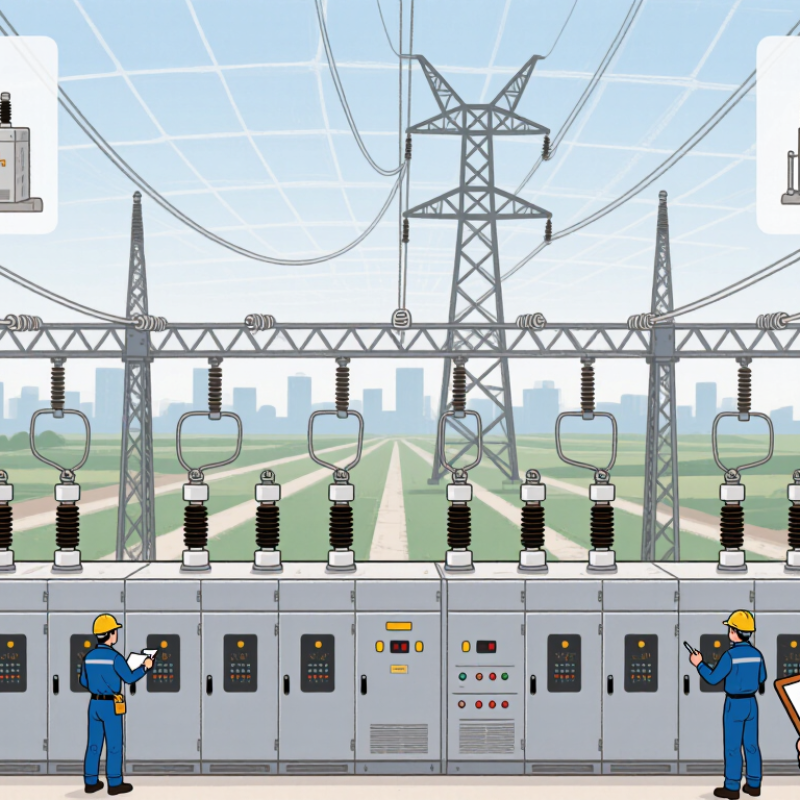
Why Choose High Voltage Switchgears?

Define High-Voltage Switchgear: IEC 62271 Applies Above 1 kV AC

Why Choose High Voltage Switchgears?

Define High-Voltage Switchgear: IEC 62271 Applies Above 1 kV AC

In IEC terminology, high-voltage switchgear is equipment rated above 1 kV AC. The IEC 62271 series sets requirements for many types of switchgear and controlgear in this range. This threshold can differ from everyday usage, where “high voltage” may describe much larger systems. That distinction matters. A 1.2 kV installation and a transmission substation do not face the same operating conditions.

Switchgear helps control circuits and isolate equipment during maintenance or faults. Depending on its design, it may also interrupt fault current and protect connected systems. For example, a unit in a dusty indoor plant room faces different demands from equipment exposed to coastal moisture. Rated voltage alone is not enough to guide selection. Engineers also consider fault levels, insulation, operating frequency, enclosure conditions, and maintenance access. One detail can be overlooked: a standards-compliant product may still be unsuitable for a particular installation.

Tips: Check the equipment’s rated voltage and the relevant IEC 62271 part. Confirm that its tested ratings match the site’s fault conditions and environment. When details are uncertain, ask a qualified engineer to review the specifications.
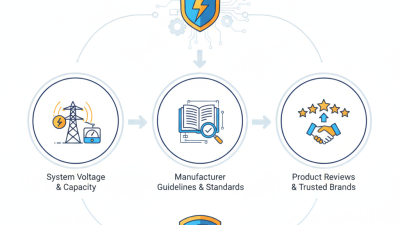
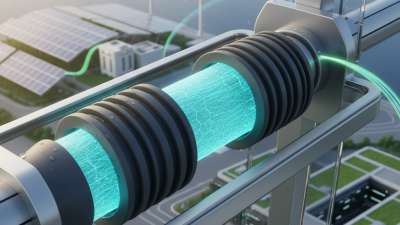
Identify Key Components: Circuit Breakers, Disconnectors, and Busbars

Why Choose High Voltage Switchgears?

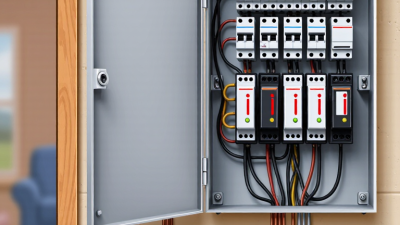
Circuit breakers, disconnectors, and busbars each perform a distinct job inside high-voltage switchgear. A circuit breaker carries normal current, then interrupts fault current when protection detects a problem. That interruption may happen in milliseconds. A disconnector provides visible isolation for maintenance, but it is not designed to break fault current. Operating sequences matter: the breaker must open before the disconnector moves. An interlock helps prevent unsafe switching.

Busbars connect incoming and outgoing circuits, distributing power through a compact assembly. Their joints deserve careful attention. A loose connection can heat up, while short-circuit forces can stress supports. The International Energy Agency’s 2023 report, Electricity Grids and Secure Energy Transitions, says annual grid investment needs to rise from about USD 300 billion to more than USD 600 billion by 2030. That scale-up makes dependable equipment and maintenance increasingly important. Still, a higher rating alone does not guarantee reliability; installation quality and inspection routines count, too.

In practice, engineers check breaker ratings against the system’s fault level, confirm disconnector clearances, and inspect busbar joints for discoloration or heat. Small clues matter. I have seen equipment schedules focus heavily on ratings, while access for testing receives less attention. That is easy to overlook. A sound design considers how technicians will isolate, inspect, and restore each section—not just how the switchgear performs on paper.

Compare Insulation Types for Systems Rated Above 1 kV

For systems rated above 1 kV, insulation choice affects footprint, maintenance, and performance in real operating conditions. Air-insulated switchgear uses surrounding air and clearances to separate energized parts. It is often easier to inspect, but needs more installation space and protection from dust, moisture, and salt. Gas-insulated designs enclose conductors in compact sealed compartments. They can suit crowded substations, though seals and gas condition require careful monitoring. Solid-insulated equipment embeds conductors in materials such as epoxy. Its compact layout can reduce exposure to contamination, but damage may be harder to inspect or repair.

No type wins everywhere. A coastal site with salty air may create different maintenance demands than a clean indoor plant. Consider voltage rating, switching frequency, access for service, ambient temperature, and the consequences of an outage. Also check how the insulation system behaves as equipment ages. A neat specification sheet cannot replace reviewing the installation environment. This part is sometimes underestimated.

Tips: Compare total lifecycle needs, not purchase price alone. Ask how insulation condition is checked, what clearances are required, and whether trained technicians can service the equipment. Verify ratings against the actual system conditions, including transient overvoltages. Small details matter.

Assess Protection Needs Using Rated Current and Short-Circuit Capacity

Why Choose High Voltage Switchgears?

Assess Protection Needs Using Rated Current and Short-Circuit Capacity

Selecting high-voltage switchgear starts with the current it must carry during normal operation. Rated current should match the expected load, including realistic plans for future expansion. A feeder serving several motors, for example, may face brief demand increases during startup. Check the equipment’s thermal limits and installation conditions, not just the number on a load schedule. A little margin helps.

Short-circuit capacity addresses a different, urgent condition: fault current. The switchgear must withstand or interrupt the prospective fault current at its installation point, as specified for its design. Engineers compare this duty with system studies and coordinate protective relays so the correct circuit opens promptly. Consider a fault near a transformer; available fault current can be much higher than normal load current. The calculation is rarely as tidy as the drawing suggests. Cable lengths, transformer impedance, and future network changes can affect the result. It is worth checking assumptions with current system data and qualified engineering review. Bigger ratings are not automatically better; the goal is suitable protection, verified against the actual duty.

Select Metal-Enclosed Gear: IEC 62271-200 Covers 1–52 kV AC

Metal-enclosed switchgear covered by IEC 62271-200 is designed for AC systems above 1 kV and up to 52 kV. That range spans many distribution and industrial applications, from compact indoor substations to larger utility installations. The standard sets requirements for construction, service conditions, and testing. It gives engineers a common basis for comparing equipment, but it does not make every design identical.

Look beyond the voltage label. Check rated current, short-time withstand current, installation environment, and the arrangement of busbars and cable compartments. A panel beside a dusty workshop may need different consideration from one in a clean, temperature-controlled room. Also confirm whether internal arc classification is specified and which sides of the assembly it covers. It is not automatic protection for every installation. Details matter.

During selection, review the manufacturer’s test documentation and match it to the intended configuration. A tested arrangement may not represent a modified lineup or different cable entry. Clearances, access, and future maintenance deserve attention too; these can be overlooked when a project focuses mainly on electrical ratings. Even experienced teams sometimes discover that a practical access detail was missing from the initial drawings. Check it early.

Why Choose High Voltage Switchgears? — Select Metal-Enclosed Gear: IEC 62271-200 Covers 1–52 kV AC

Selection Dimension Relevant Data or Classification What to Check When Selecting
IEC 62271-200 scope AC metal-enclosed switchgear and controlgear rated above 1 kV and up to and including 52 kV. Confirm that the equipment type and rated voltage fall within the standard’s scope. The standard does not make every product suitable for every installation.
Common rated-voltage values Examples include 3.6, 7.2, 12, 17.5, 24, 36, 40.5 and 52 kV. Match the equipment’s rated voltage to the system’s highest voltage for equipment, not just its nominal operating voltage.
Rated normal current Specified separately for busbars and individual circuits; the available rating depends on the design. Allow for expected load, future expansion, ambient conditions and any installation-related derating. Verify the ratings on the equipment data sheet.
Short-time withstand current A declared current withstand rating and duration, selected for the particular equipment design. Use the prospective fault current and protection-clearing time from the system study. Do not assume one universal current or duration.
Peak withstand current A declared peak-current rating for the switchgear assembly. Check against the maximum prospective fault-current peak, including the system’s asymmetry and installation conditions.
Loss of service continuity (LSC) IEC classifications include LSC1, LSC2A and LSC2B. Choose according to how much of the assembly is intended to remain energized while an accessible compartment is opened. Confirm the specific switching and access conditions for the design.
Partition class PM uses earthed metal partitions and shutters; PI uses one or more partitions or shutters made of insulating material. Consider personnel access, maintenance practices and the required separation between compartments. Verify the actual construction and classification.
Internal arc classification (IAC) Where declared and tested, the classification identifies accessibility type (A or B), tested sides (F, L and/or R), and specified test current and duration. Check that the tested configuration matches the installation, including room layout, accessible sides, ceiling height and pressure-relief arrangements. IAC performance is not automatic for all gear.
Enclosure protection Ingress-protection ratings are specified for the particular enclosure and configuration. Confirm the required protection against access to hazardous parts and ingress of solid objects or water for the actual environment. Do not infer an IP rating from IEC 62271-200 compliance alone.
Installation environment Indoor or outdoor suitability, ambient limits and any altitude or special-service conditions depend on the equipment design and applicable specifications. Compare the manufacturer’s declared service conditions with the site conditions, including temperature, humidity, altitude, pollution and ventilation.
Typical application Metal-enclosed AC gear is used in installations such as substations, industrial power systems and commercial or infrastructure distribution networks. Base selection on the network study, operating philosophy, protection scheme, maintenance requirements and applicable local rules.

Selection note: IEC 62271-200 defines requirements and classifications for covered switchgear; it does not prescribe a single rating or configuration for every project. Confirm declared ratings, test evidence and installation requirements for the selected assembly.