A surge can arrive in a blink. Lightning, utility switching, and nearby electrical faults may send damaging voltage through wiring, threatening appliances, controls, and sensitive electronics. NOAA reports that the United States experiences millions of lightning flashes each year. Its National Weather Service uses a blunt safety warning: “When thunder roars, go indoors.” Lightning-safety specialist John Jensenius has also emphasized the danger of treating storms as distant or harmless. Surge Arresters cannot prevent a storm, but correctly selected and installed devices can help divert transient overvoltage away from protected equipment.
Choosing among the 10 Best Surge Arresters for 2026 requires more than comparing prices or headline voltage ratings. IEEE C62.11 covers metal-oxide surge arresters for AC power circuits, while IEC 61643-11 addresses low-voltage surge protective devices. These standards serve different applications, so a product’s intended system, continuous operating voltage, discharge capability, and installation location matter. A device for a utility substation is not automatically suitable for a home panel. Check the manufacturer’s specifications, certification details, and compatibility with the equipment being protected.
This guide compares options by application, protection characteristics, build quality, and practical installation considerations. A compact unit beside a service panel may look reassuring, yet wiring length and grounding still affect performance. That detail is easy to overlook. Ratings also do not tell the whole story; real protection depends on the complete installation. We’ll note where published specifications leave questions unanswered, rather than treating every product claim as proven performance. The goal is a clearer shortlist, not a promise of zero damage.
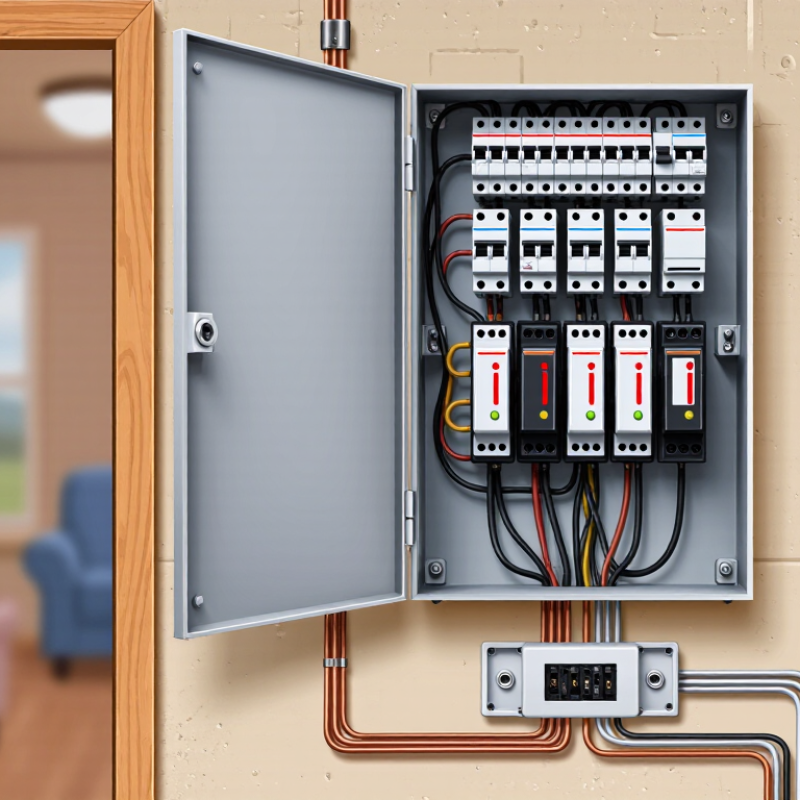
Surge arresters protect electrical systems by limiting short-lived voltage spikes and directing excess current away from sensitive equipment. Lightning can create powerful transients, but switching motors, transformers, or large loads can also disturb voltage. In low-voltage buildings, these devices are commonly called surge protective devices, or SPDs. They do not eliminate every disturbance. They reduce the voltage that connected equipment experiences.
The Uptime Institute’s 2024 Annual Outage Analysis found that 54% of respondents’ latest significant outages cost more than $100,000. Sixteen percent exceeded $1 million. These figures cover outages broadly, not surge-related events alone. Still, they show why protecting power systems deserves careful attention. An SPD’s performance depends on more than its label: installation location, grounding, wiring length, and coordination between devices all matter. A long connection to the grounding path can undermine protection.
A service-panel device can help manage incoming surges, while point-of-use protection adds another layer near electronics. IEC 61643-11 sets requirements for low-voltage surge protective devices, but standards do not replace proper system assessment. One detail is easy to overlook: a device may wear out after repeated events, even when no damage is obvious. I would not treat an indicator light or a high rating as proof that every surge is covered.
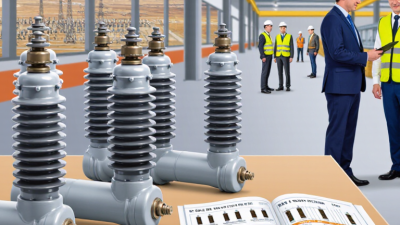
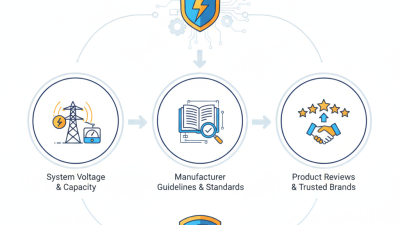
Choosing a surge arrester in 2026 starts with the electrical system, not a product ranking. Confirm the nominal voltage, grounding arrangement, and maximum continuous operating voltage before comparing models. A unit with the wrong voltage rating may fail to protect equipment—or wear out under normal conditions. Check the manufacturer’s technical documentation, not just the front-panel label.
Then match the arrester to the installation point. Service entrances and sensitive equipment panels can require different protection classes and discharge ratings. Review the stated impulse-current capacity, response characteristics, and coordination with upstream devices. Grounding matters, too: a long or poorly bonded connection can reduce protection where it counts. Small detail. Big consequence. This is easy to overlook when comparing headline ratings.
Finally, consider the conditions around the device. Heat, moisture, dust, available space, and expected maintenance access all affect the choice. Look for clear status indicators, replacement guidance, and recognized test or certification information relevant to your region. For a critical installation, have a qualified electrical professional verify the selection against the system design. I would not treat a higher number on a datasheet as automatic proof of better protection; the right rating depends on where and how the arrester will be used.
There is no universally best surge arrester or surge protective device (SPD); the right choice depends on the electrical system, exposure, and installation point. Use these criteria to compare products, and verify ratings against the applicable electrical code and manufacturer documentation.
| # | Selection criterion | What to check | Practical guidance |
|---|---|---|---|
| 1 | Application and system type | AC or DC, nominal voltage, frequency, grounding arrangement, and whether the circuit is single-phase or three-phase. | Choose a device explicitly rated for the system. PV arrays and other DC circuits require DC-rated SPDs; an AC rating is not interchangeable. |
| 2 | SPD type or installation class | The applicable standard’s classification and the intended installation location. | Under IEC 61643-11, Type 1 devices are tested with an impulse current (Iimp, 10/350 μs); Type 2 devices use discharge-current tests (8/20 μs); Type 3 devices are tested for voltage protection using a combination-wave generator. Confirm the classification required by local rules. |
| 3 | Maximum continuous operating voltage (Uc) | The declared Uc for each protection mode, compared with the circuit’s highest normal operating voltage. | Uc must suit the system voltage and grounding configuration. An unsuitable rating can cause premature operation or inadequate protection; follow the device instructions and system design. |
| 4 | Voltage protection level (Up) | The declared Up and the protected equipment’s impulse withstand voltage. | Select an Up compatible with the equipment being protected. Actual protection also depends on wiring length, connections, and installation layout. |
| 5 | Surge-current ratings | For Type 1, review Iimp; for Type 2, review nominal discharge current (In) and maximum discharge current (Imax), where declared. | Compare ratings tested with the same waveform and under the same standard. Do not compare different current ratings as if they were equivalent. |
| 6 | Protection modes and pole configuration | Protected paths (such as line-to-neutral, line-to-earth, or neutral-to-earth) and compatibility with the panel’s wiring system. | Confirm the configuration suits the supply earthing arrangement and provides the protection required for each conductor. Follow the connection diagram supplied with the SPD. |
| 7 | Short-circuit and backup protection | Short-circuit current rating (SCCR), any declared short-circuit withstand or interrupt rating, and the specified backup fuse or breaker. | The device and its required overcurrent protection must be suitable for the prospective fault current at the installation point. Use the exact coordination details in the product instructions. |
| 8 | Thermal disconnection and status indication | Thermal disconnector, clear end-of-life indication, and—where needed—a remote alarm contact. | Check how a failed or disconnected module is indicated and whether replacement modules are available. A status indicator does not replace periodic inspection. |
| 9 | Coordination and installation details | Coordination with upstream and downstream SPDs, conductor sizes, connection length, mounting method, and required clearances. | A coordinated protection scheme may use devices at more than one location. Keep connections short and follow the manufacturer’s wiring and installation instructions. |
| 10 | Standards, environment, and serviceability | Relevant certification and test standard, temperature and enclosure ratings, documentation, warranty terms, and replacement-module availability. | For low-voltage AC SPDs, check applicable requirements such as IEC 61643-11 or UL 1449; PV DC SPDs are covered by IEC 61643-31. Verify the current edition and local acceptance requirements for the installation. |
Surge arresters help limit short voltage spikes caused by lightning or switching events. The right type depends on the equipment, system voltage, and installation point. Metal-oxide arresters, commonly made with zinc-oxide blocks, respond quickly and are widely used on distribution lines, substations, and transformers. Higher-capacity station arresters protect critical equipment where surge energy can be substantial. The labels can be confusing.
Lower-voltage surge protective devices are commonly installed at service panels or near sensitive equipment. They can help protect computers, controls, and household electronics from transient surges. For outdoor distribution networks, line arresters may be mounted near transformers or exposed sections of overhead line. Signal and data circuits need compatible protectors designed for their operating voltages; a power-line unit is not automatically suitable. Actual protection also depends on sound grounding and coordinated device ratings.
Tips: Check the system voltage, expected surge exposure, and manufacturer specifications before selecting an arrester. Keep connecting leads short, since long wiring can reduce protection. Have a qualified electrician assess installation and grounding. A device can be correctly rated yet perform poorly with a weak ground.
The right choice depends on where a surge enters and what equipment needs protection. NOAA’s National Weather Service reports about 25 million lightning strikes in the United States each year. That exposure makes installation location and rated protection levels worth checking.
For service entrances, compare Type 1 devices; for distribution panels, compare Type 2. Type 3 plug-in units protect individual electronics, while hardwired point-of-use models suit fixed equipment. Modular designs can simplify replacement. Small detail, big difference.
Other useful comparisons include DIN-rail units for control cabinets, photovoltaic DC arresters for solar strings, and data-line protectors for communication circuits. Industrial metal-oxide arresters are designed for higher-energy power systems, while compact residential models fit tighter panels.
IEEE C62.11-2020 covers metal-oxide surge arresters for AC power circuits above 1 kV; IEC 61643-11 addresses low-voltage AC surge protective devices. These standards help define testing and performance, but they do not make every product interchangeable.
Check maximum continuous operating voltage, nominal discharge current, response data, and backup protection requirements. A rating can look impressive on paper. Yet, mismatched voltage or poor installation may leave a weak link. Compare verified test documentation, enclosure rating, replacement indicators, and the manufacturer’s installation instructions before choosing.
Choosing a surge arrester for 2026 is only part of the job. Correct installation matters just as much. A qualified electrician should match the device’s voltage rating and surge capacity to the service panel and expected exposure. Follow the manufacturer’s instructions and local electrical requirements. Keep lead wires short and direct; unnecessary bends and length can reduce protection. The grounding connection needs particular care. Never inspect or install equipment inside an energized panel.
During routine checks, look for cracked housings, corrosion, loose connections, or a changed status indicator. Some models include an event counter, but a low count does not prove the device is healthy. Check the panel after a major storm or nearby electrical event, too. Small details matter. Keep a record of the installation date, inspection findings, and any indicator changes. A checklist helps, though it can miss heat damage hidden behind a cover.
Replace an arrester when its indicator signals failure, visible damage appears, or its service life ends under the manufacturer’s guidance. Do not assume every unit requires replacement after one surge; designs differ. Have a qualified professional assess the wiring and grounding before fitting a new unit. The uncomfortable truth: protection is not a guarantee against every surge. It is one layer, and sometimes the wiring deserves attention before the device does.
Standard impulse-waveform timing helps explain the different surge tests used when evaluating protective devices.
The 8/20 and 10/350 waveforms describe current impulses; 1.2/50 describes a voltage impulse. These standardized waveform designations are not product rankings or directly comparable measures of device performance. During installation, inspection, and replacement, confirm that the arrester’s ratings and application match the system and applicable standards.