Leave Your Message
Online Inuiry
53d365b3-6f89-4893-96a3-d70d895f9b81Wechat
27d442a5-5d9b-4e33-a816-996fe42856d8Whatsapp
6503fd048f54d46697

What Are the Types of Pole Fittings?

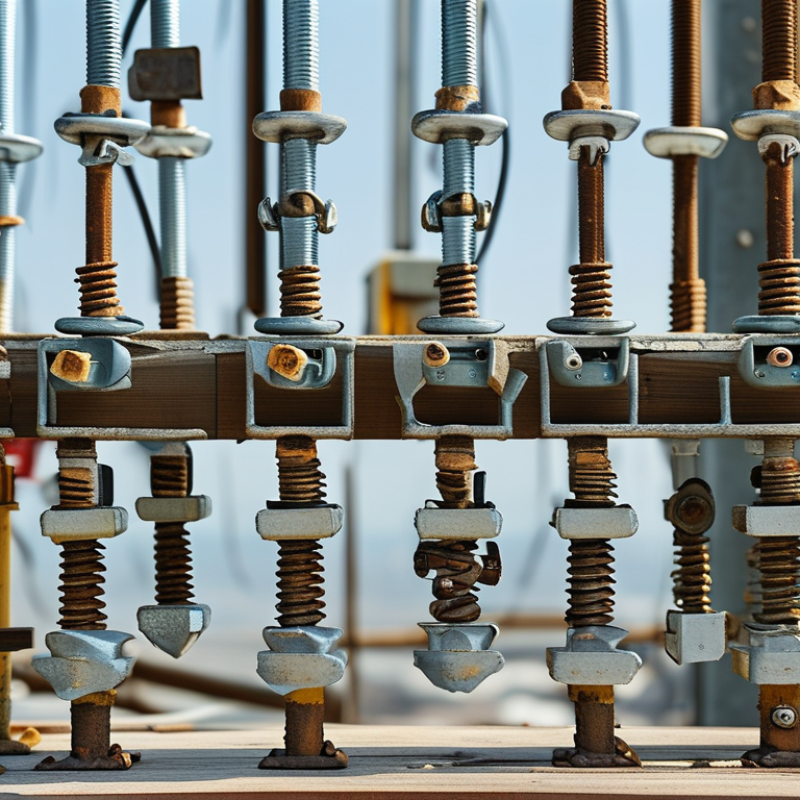
What Are the Types of Pole Fittings? This question matters wherever poles support power lines, communication cables, lighting equipment, or public infrastructure. Pole Fittings connect, secure, align, and protect components on wooden, concrete, steel, and composite poles. Common examples include crossarm brackets, pole clamps, cable supports, insulator mounts, guying hardware, and equipment brackets. Each type serves a different mechanical purpose.

A crossarm bracket spreads conductor loads across the pole. Cable clamps hold communication lines at a controlled distance. Guying fittings stabilize poles exposed to wind, uneven terrain, or heavy equipment. Some fittings use galvanized steel for outdoor strength, while stainless steel suits more corrosive environments. Engineers also consider bolt diameter, working load, vibration, drainage, and contact between dissimilar metals. Small details matter.

Field installation reveals practical differences. A fitting may meet its listed load yet fail when corrosion, poor alignment, or loose bolts are ignored. That is why technicians inspect threads, washers, pole surfaces, and fastener torque. They also compare the product label with current manufacturer instructions and local requirements. Standards can vary by region and application. No single fitting works everywhere. That point is easy to overlook.

Reliable selection begins with the pole material, supported equipment, expected weather, and maintenance plan. Product drawings and certified load data offer stronger guidance than appearance alone. An experienced installer will also check clearance around energized equipment and use approved safety procedures. This overview explains the main types of Pole Fittings, their typical uses, and the limitations that should shape each choice. Some projects still require a qualified engineer’s review.
What Are the Types of Pole Fittings?

Definition and Role of Pole Fittings

What Are the Types of Pole Fittings?

Definition and Role of Pole Fittings

Pole fittings are mechanical and electrical accessories installed on utility poles. They connect conductors, support equipment, control movement, and maintain required clearances. Common types include crossarm brackets, suspension clamps, dead-end fittings, guy attachments, transformer mounts, streetlight arms, insulator pins, and grounding hardware. Each fitting transfers forces between the pole and the line. Small parts matter.

In field inspections, a loose clamp may leave visible metal marks around a bolt hole. A poorly aligned crossarm can increase conductor stress during wind or ice loading. The fitting must match the pole material, conductor size, load path, and local environmental conditions. Galvanized steel resists corrosion, while polymer components can reduce weight and electrical tracking risks. However, no material is perfect. Coastal salt, vibration, and repeated temperature changes still require inspection.

The International Energy Agency’s Electricity Grids and Secure Energy Transitions report estimates that over 80 million kilometres of grids must be added or refurbished worldwide by 2040. That expansion increases demand for reliable, standardized fittings. The U.S. Department of Energy’s National Transmission Needs Study also identifies aging assets and regional capacity limitations as major planning concerns. These findings show why pole fittings are not simple accessories. They influence installation speed, maintenance safety, structural reliability, and outage exposure. Standards such as the National Electrical Safety Code and relevant IEEE practices help engineers verify clearances, strength, grounding, and compatibility before installation. A neat classification can still mislead; actual site conditions decide whether a fitting performs well.
Main Categories of Pole Fittings

Pole fittings are hardware components that connect, support, protect, or control equipment on a utility pole. Their main categories depend on the load, installation position, and electrical function. In field inspections, identifying the category first makes replacement work safer and more accurate.

Support fittings carry cables and mounted equipment. Crossarms, brackets, clamps, and insulator pins belong to this group. They keep conductors separated from the pole surface. Suspension fittings hold cables beneath a support point. They are common where the line continues with limited directional change. The spacing must match the conductor size and expected movement.

Tension and dead-end fittings manage pulling forces at corners, terminals, and long spans. Guying hardware adds stability when wind or conductor tension pushes the pole sideways. Stay plates, guy grips, and anchor connections must work as one system. Grounding fittings create a low-resistance path for fault current. Bonding clamps and grounding connectors are typical examples. A loose connection can increase heat and corrosion.

Protective fittings include guards, covers, and cable supports. They reduce abrasion, water entry, and accidental contact. Some fittings serve more than one purpose. That detail is easy to miss. Material choice also matters. Galvanized steel resists outdoor exposure, while approved polymer parts can reduce weight and corrosion concerns. However, no category should be selected by appearance alone. Actual loads, pole material, conductor arrangement, and local installation standards require careful checking. I have seen seemingly minor mismatches create costly rework. That is an imperfect lesson, but an important one.

What Are the Types of Pole Fittings? — Main Categories of Pole Fittings

Pole fittings can be grouped by their primary installation function. This chart shows the number of representative fitting examples included in each category. Typical examples include crossarm brackets, suspension clamps, guy clamps, grounding clamps, U-bolts, and related fastening hardware. The figures describe the classification used here and are not market-share data.

Structural and Support Fittings

What Are the Types of Pole Fittings?

Structural and support fittings determine how a pole carries wires, equipment, and environmental loads. Common examples include crossarms, pole bands, braces, suspension clamps, and guy-wire attachments. A crossarm spreads conductors across the pole, while braces reduce twisting during wind or ice loading. Pole bands secure equipment without drilling into the pole. Guy attachments transfer pulling forces into the supporting system.

They need compatible dimensions and verified load ratings. Small mismatches can create movement, noise, or premature wear. In field inspections, rust around bolt holes often reveals trapped moisture. That detail matters. Support fittings may also include stand-off brackets, mounting plates, and cable supports. These components maintain clearance from the pole and help keep lines organized. A well-designed assembly keeps hardware aligned, accessible, and protected from sharp edges.

Material choice requires judgment. Galvanized steel often resists outdoor corrosion, but coastal salt can accelerate surface damage. Aluminum can reduce weight, yet contact with dissimilar metals may cause galvanic corrosion. Insulating washers can help, when correctly selected. Load calculations should reflect conductor tension, equipment weight, wind exposure, and local installation conditions. Manufacturing tolerances and uneven pole surfaces can complicate installation. I have seen a fitting look secure while its brace carried almost no useful support. That is an easy mistake to miss. Inspection records should include bolt condition, alignment, coating damage, and signs of movement.

What Are the Types of Pole Fittings? - Structural and Support Fittings

Fitting Type Primary Category Main Function Typical Pole Applications Common Materials Typical Connection Method Key Design Considerations
Pole Top Cap Protection Seals the open top of a hollow pole and helps prevent water, debris, and contaminants from entering. Steel, aluminum, and composite utility poles; lighting poles; sign-support poles. Galvanized steel, aluminum, stainless steel, or UV-resistant polymer. Slip-fit, threaded, or secured with set screws. Cap diameter, pole wall thickness, drainage requirements, corrosion resistance, and wind exposure.
Base Plate Structural Support Transfers axial, shear, and overturning loads from the pole into the foundation. Flanged steel lighting poles, traffic signal poles, camera poles, and sign structures. Structural carbon steel or stainless steel, usually protected with galvanizing or a coating system. Welded to the pole and fastened to anchor bolts embedded in concrete. Plate thickness, bolt-circle diameter, anchor-bolt arrangement, weld design, uplift, and bending forces.
Anchor Bolt Assembly Foundation Connection Secures a base-plated pole to its concrete foundation and resists tension, shear, and overturning. Flange-mounted lighting, utility, communication, and traffic-support poles. High-strength carbon steel or stainless steel with compatible nuts and washers. Cast-in-place bolt cage, template, nuts, and leveling washers. Bolt grade, embedment depth, projection, bolt-circle accuracy, thread protection, and foundation design.
Pole Band Attachment Support Provides a clamping point for mounting accessories without drilling through the pole. Streetlight arms, signs, cable supports, antennas, and small equipment attachments. Galvanized steel, stainless steel, or aluminum. Two-piece or multi-piece clamp tightened with bolts, nuts, and washers. Pole diameter range, clamp friction, bolt preload, galvanic compatibility, and allowable eccentric load.
U-Bolt Clamp Clamping Support Fastens brackets, conduits, cables, or small structural members around a pole. Utility poles, communication poles, lighting poles, and guardrail or sign supports. Hot-dip galvanized steel, stainless steel, or zinc-plated steel for low-corrosion environments. U-shaped threaded bolt with a saddle, nuts, and washers. Rod diameter, leg length, saddle radius, tightening torque, vibration resistance, and surface protection.
Crossarm Bracket Structural Support Supports a horizontal crossarm used to carry conductors, insulators, or other line hardware. Overhead electrical distribution poles and communication support structures. Galvanized steel, aluminum, or treated wood combined with metal hardware. Through-bolts, lag screws, machine bolts, or pole bands, depending on pole material. Vertical and transverse loads, conductor spacing, bolt capacity, clearance, and corrosion protection.
Brace and Stay Bracket Stability Support Connects braces or guying components to reduce pole deflection and improve lateral stability. Utility poles carrying unbalanced conductor loads, corner poles, and dead-end structures. Galvanized structural steel or stainless steel. Bolted or clamped connection with a brace, guy wire, or stay assembly. Guy angle, tensile load, pole condition, connection eccentricity, and resistance to cyclic wind loading.
Luminaire Arm Adapter Equipment Support Connects a lighting arm or luminaire to the pole and establishes the required mounting angle. Roadway, area, pathway, and parking-lot lighting poles. Aluminum, galvanized steel, or powder-coated steel. Slip-fit insertion, clamp connection, or bolted side mount. Arm outside diameter, insertion depth, tilt angle, luminaire weight, wind area, and cable routing.
Cable Support Bracket Service Support Organizes and supports power, communication, or fiber cables along the pole. Utility, telecommunications, lighting, and monitoring poles. Galvanized steel, stainless steel, aluminum, or UV-resistant polymer. Bolted clamp, band, saddle, or pole-mounted bracket. Cable weight, bend radius, spacing, abrasion protection, ultraviolet exposure, and maintenance access.
Handhole Cover and Frame Access Protection Provides access to internal wiring while protecting electrical components inside the pole. Steel and aluminum lighting poles, traffic signal poles, and electrical service poles. Aluminum, galvanized steel, stainless steel, or weather-resistant steel. Recessed frame with a bolted or captive-screw cover and gasket where required. Opening size, water resistance, vandal resistance, grounding continuity, and clearance for cable connections.
Grounding Lug Electrical Safety Creates a reliable connection between the metal pole, grounding conductor, and grounding system. Metal lighting poles, sign poles, utility structures, and electrical equipment supports. Tinned copper, bronze, stainless steel, or compatible galvanized hardware. Bolted or threaded attachment to the pole with a conductor clamp or terminal. Conductor size, electrical continuity, corrosion compatibility, accessible location, and bonding requirements.
Guy Wire Attachment Tension Support Transfers lateral forces from the pole to a guy wire and an independent anchor point. Overhead distribution poles, communication poles, and structures exposed to high lateral loads. Galvanized steel or stainless steel, with forged or formed connection components. Pole eye, guy clamp, thimble, strand grip, and tensioning hardware. Design tension, angle, anchor capacity, clearance, wire size, fatigue, and protection against mechanical damage.

Note: Final fitting dimensions, material grades, corrosion protection, and load ratings should be selected according to the pole design, local environmental conditions, applicable structural codes, and the manufacturer's certified calculations.

Electrical and Cable Management Fittings

What Are the Types of Pole Fittings?

Electrical and Cable Management Fittings

Pole fittings support conductors, protect cable routes, and keep electrical installations orderly in exposed environments. Common options include cable clamps, conduit brackets, suspension hooks, junction boxes, and service-entry fittings. Each type serves a different mechanical or electrical purpose. Cable clamps hold wires against wind movement and reduce stress at connection points. Conduit brackets keep rigid pathways aligned along the pole. Junction boxes protect splices from moisture, dust, and accidental contact.

Material choice matters. Galvanized steel handles demanding outdoor conditions, while corrosion-resistant alloys suit coastal or chemically exposed areas. Polymer fittings can reduce weight and electrical conductivity risks. However, material compatibility deserves careful review. Dissimilar metals may accelerate corrosion when moisture remains trapped between surfaces. That detail is easy to miss.

Cable management also depends on spacing and load. Installers should check cable diameter, bending radius, weight, and expected wind exposure before selecting a fitting. Over-tightened clamps can crush insulation. Loose supports can allow abrasion over time. Grounding and bonding fittings provide a controlled path for fault current, but they must match the system design and local electrical requirements. Weather seals should remain flexible, not brittle. Small cracks matter.

In field work, neat routing improves inspection and maintenance. Labels, drip loops, and accessible fasteners can save time later. Still, every pole is different. A fitting that works well on one structure may be unsuitable on another. Reviewing drawings, site conditions, and applicable safety codes remains essential.

Selection Criteria for Different Pole Applications

What Are the Types of Pole Fittings?

Selection Criteria for Different Pole Applications

Pole fittings include brackets, outreach arms, spigots, clamps, crossarms, insulators, cable supports, and access platforms. Each part transfers weight, wind pressure, vibration, or electrical load into the pole. A short outreach arm suits a narrow street, while a double arm improves coverage on wider roads. For utility poles, crossarms and insulators must match conductor spacing and voltage requirements. Small details matter.

Selection begins with the application, not the fitting catalogue. Engineers should check pole material, diameter, wall thickness, load height, and connection geometry. ASCE 7-22 wind provisions use site-specific wind speeds, exposure, and importance factors. In exposed coastal areas, a light bracket can become a serious fatigue risk. The National Electrical Safety Code also requires utility structures to withstand defined vertical, transverse, and longitudinal loads. Corrosion resistance needs equal attention. Galvanized steel, stainless steel, and protective coatings perform differently near salt, moisture, and industrial pollution.

Lighting projects need another filter: optical aim, maintenance access, and energy performance. The International Energy Agency’s Energy Efficiency 2023 report identifies lighting as roughly 15% of global electricity consumption. Better aiming can reduce wasted illumination, but fitting stiffness still matters. A poorly aligned arm may create glare and uneven pavement brightness. Field inspections often reveal this problem. Designers should verify bolt torque, drainage, coating damage, and clearance after installation. I would not select a fitting from load rating alone; real sites are less tidy than drawings.