Leave Your Message
Online Inuiry
53d365b3-6f89-4893-96a3-d70d895f9b81Wechat
27d442a5-5d9b-4e33-a816-996fe42856d8Whatsapp
6503fd048f54d46697

7 Tips for Buying Low Voltage Switchgears?

Buying Low Voltage Switchgears is not simply a matter of comparing prices and choosing the largest panel. The right decision affects safety, uptime, maintenance, and future expansion. A cabinet may look robust, yet poor ventilation can create dangerous heat around busbars and cable terminations. Small details matter.

This guide presents seven practical tips for evaluating Low Voltage Switchgears with greater confidence. It considers load demand, fault levels, enclosure protection, protection coordination, certification, installation conditions, and after-sales support. These points reflect common lessons from industrial projects, electrical inspections, and equipment selection discussions with qualified engineers. Still, no checklist replaces a site-specific design review. Conditions vary. That part is easy to underestimate.

Buyers should request clear technical data, including rated current, short-circuit withstand strength, temperature-rise results, and applicable testing records. Manufacturer experience also matters, especially when the equipment will operate in dusty workshops, humid utilities rooms, or outdoor substations. Ask how spare breakers, relays, and busbar components will be supplied five years later. A low purchase price can become expensive after one difficult repair.

The following tips are designed to support careful comparison rather than rushed purchasing. They encourage practical questions, documented evidence, and realistic attention to installation details. Some recommendations may seem obvious. They are still frequently missed. A reliable switchgear choice begins with understanding the actual system, not trusting an attractive brochure.
7 Tips for Buying Low Voltage Switchgears?

Understanding Low-Voltage Switchgear and Its Main Functions

Understanding Low-Voltage Switchgear and Its Main Functions

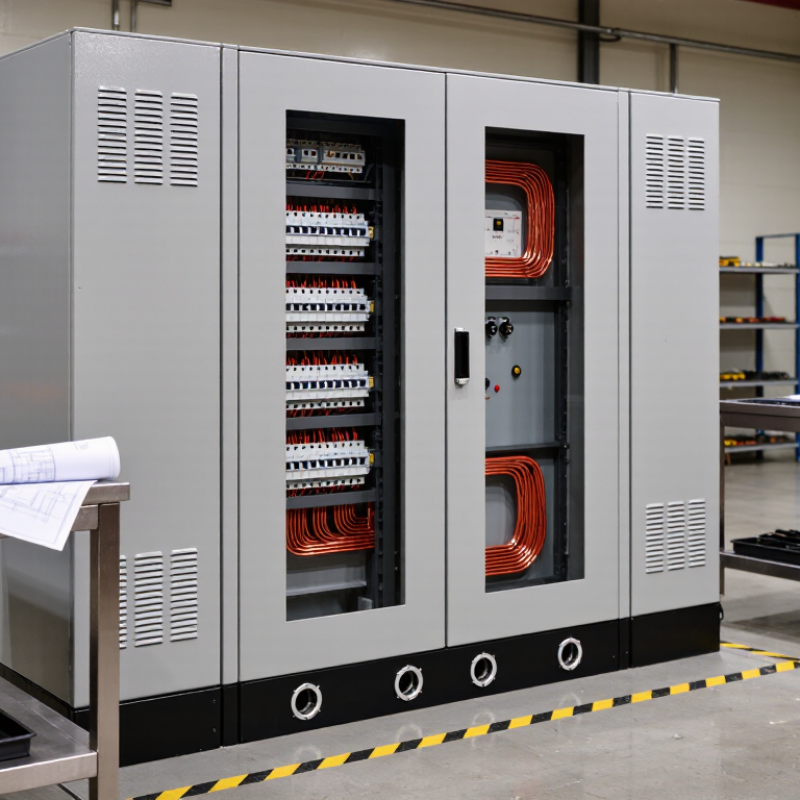
Low-voltage switchgear distributes, controls, and protects electrical power below 1,000 volts AC. It usually combines circuit breakers, busbars, disconnectors, meters, and protective relays. During an overload or short circuit, the breaker interrupts current before cables and equipment suffer severe damage. During maintenance, isolation devices create a visible safety boundary.

Small detail. Big consequence.

The International Energy Agency’s Electricity 2024 report forecasts global electricity demand will grow by about 3.4% annually from 2024 to 2026. That pressure makes dependable distribution equipment more important in factories, offices, and data facilities. When comparing switchgear, check rated current, short-circuit withstand capacity, enclosure protection, temperature rise, and coordination between protective devices. IEC 61439 also requires verified design performance for low-voltage assemblies.

A higher rating is not automatically better. Oversizing can increase cost and complicate maintenance.

Practical inspections often reveal another function: monitoring. Integrated meters can show load imbalance, power factor, and unusual temperature changes. These readings help maintenance teams identify loose connections before failure. However, digital monitoring does not replace physical inspection. A dusty cabinet, poor cable bend, or crowded busbar can still create trouble.

Many buyers focus on purchase price first. That choice may ignore installation time, spare parts, testing, and future capacity. A switchgear selection should reflect the actual site, not only a catalogue rating.
Assessing Electrical Requirements Before Choosing Switchgear

7 Tips for Buying Low Voltage Switchgears

Assessing Electrical Requirements Before Choosing Switchgear

Before selecting low voltage switchgear, map the electrical system in detail. Record the rated voltage, operating current, frequency, phase arrangement, and expected fault current. Check every major load, including motors, heaters, lighting circuits, and variable-speed drives. Motor starting current can briefly exceed normal demand, so average readings may mislead. A qualified engineer should verify calculations against applicable electrical standards and site conditions.

Tip 1: Build a realistic load schedule. Include present demand, diversity factors, and planned expansion. Leave practical spare capacity, but avoid oversized equipment that increases cost and reduces efficiency. Tip 2: Confirm protection coordination. Circuit breakers should isolate faults selectively, limiting unnecessary shutdowns. Review short-circuit ratings, trip settings, cable sizes, and discrimination studies together. They cannot be judged separately.

Inspect the installation environment before choosing an enclosure. Dust, moisture, heat, corrosive vapors, and restricted ventilation can change the required protection level. Measure the available wall or floor space, cable entry direction, maintenance clearance, and access route. I have seen projects fail because a technically suitable panel could not pass through a narrow doorway. That mistake is expensive. Recheck drawings against the actual site, because drawings are sometimes outdated. Also consider metering, remote monitoring, arc-flash reduction, labeling, and safe isolation procedures. Never assume future loads will match today’s equipment. Some uncertainty remains, and documenting it makes later decisions more reliable.

Comparing Safety Features, Ratings, and Protection Systems

When buying low voltage switchgear, compare safety features before price. Check enclosure integrity, shutters, interlocks, grounding continuity, and arc-flash containment. A missing mechanical interlock can expose energized parts during maintenance. It happens.

Confirm the assembly’s ratings under real operating conditions. IEC 61439 requires verification of temperature rise, short-circuit withstand, insulation, and mechanical performance. Ask for test evidence, not only a catalogue declaration. Compare rated operational voltage, current, frequency, and short-circuit withstand capacity. The interrupting rating must exceed the available fault current at the installation point. For U.S. projects, verify the short-circuit current rating and coordination requirements under applicable electrical codes. IP ratings also matter. IP54 may suit dusty indoor areas, while outdoor installations often demand stronger sealing and corrosion protection. However, a higher IP rating does not automatically provide better arc-flash protection.

Review the protection system as a complete sequence. Adjustable circuit breakers, ground-fault protection, selective coordination, and current-limiting devices should work together. Check trip curves against motor starting currents and transformer inrush. Protection that trips too quickly can interrupt production; protection that trips too slowly can increase damage. ESFI’s analysis of U.S. Bureau of Labor Statistics data recorded 145 workplace electrical fatalities in 2022, showing why isolation and fault protection deserve practical attention. Ask for arc-flash calculations based on IEEE 1584 methods, verified maintenance intervals, and clear labels. I would also inspect cable access and spare ways personally. Documents can be correct, yet installation details may still create risk.

7 Tips for Buying Low Voltage Switchgears: Comparing Safety Features, Ratings, and Protection Systems
Tip What to Compare Relevant Rating or Standard Safety Features to Check Practical Buying Guidance
1 Confirm the Voltage and Current Requirements Low-voltage equipment is generally designed for systems up to 1,000 V AC or 1,500 V DC. Compare the rated operational voltage (Ue), rated insulation voltage (Ui), rated current (In), and frequency. Verify clearances, creepage distances, insulation barriers, shrouded live parts, and correctly sized busbars, cables, and terminals. Select equipment with ratings equal to or higher than the system design values. Allow appropriate capacity for continuous loads, ambient temperature, and future expansion.
2 Check Short-Circuit Withstand Capability Compare the prospective fault current with the assembly short-circuit rating. Key values may include Icu, Ics, and Icw, depending on the applicable standard. IEC 61439-1 and IEC 61439-2 cover low-voltage assemblies. Look for tested busbar supports, fault-rated enclosures, secure conductor connections, and documented short-circuit test results. Do not select a breaker solely by its continuous current rating. Its interrupting capacity must be suitable for the available fault current at the installation point.
3 Evaluate Ingress and Environmental Protection Use the IP code defined by IEC 60529. For example, the first digit addresses protection against solids and the second digit addresses protection against water. An IP54 enclosure provides limited dust ingress protection and protection against water splashing. Check gasket quality, door sealing, corrosion resistance, drainage, ventilation, condensation control, and resistance to dust, moisture, chemicals, or outdoor exposure. Match the enclosure rating to the actual location. Indoor, dusty, wet, corrosive, and outdoor installations may require different enclosure materials and IP levels.
4 Compare Protective Device Coordination Review overload, short-circuit, and earth-fault protection. Selectivity and discrimination should be verified using manufacturer time-current curves or a properly engineered coordination study. Check adjustable trip settings, electronic trip units, undervoltage release, shunt trip, auxiliary contacts, and zone-selective interlocking where required. Proper coordination helps isolate only the faulty circuit and can reduce unnecessary shutdowns. Confirm that upstream and downstream devices work together at the expected fault levels.
5 Review Shock and Arc-Flash Protection Look for protection against direct contact, suitable internal segregation, secure covers, and clearly identified isolation points. Arc-flash risk should be assessed according to local electrical safety requirements and the installation design. Useful features include door interlocks, trapped-key interlocking, withdrawable units, shutters over live contacts, visible isolation, insulated barriers, and arc-resistant construction where specified by the risk assessment. Choose a design that supports safe operation, inspection, testing, and maintenance. Labels, warning signs, approach boundaries, and an effective lockout/tagout procedure are also essential.
6 Specify Ground-Fault, Surge, and Residual-Current Protection Residual-current devices are selected by rated residual operating current and application. A 30 mA device is commonly used for additional personnel protection where required by local codes. Surge protective devices are classified by application and tested under standards such as IEC 61643-11. Check protective conductor continuity, earth-fault protection, RCD test functions, surge-disconnector status indication, backup overcurrent protection, and correct SPD connection to the earthing system. Protection type and sensitivity must match the load. Consider leakage currents, lightning exposure, switching surges, supply configuration, and the required coordination between upstream and downstream SPDs.
7 Verify Certification, Testing, and Maintenance Support Confirm conformity with the standards applicable to the project, such as IEC 61439 for low-voltage assemblies, IEC 60947 for low-voltage switchgear and controlgear, or the relevant national requirements. Request routine test records, design verification evidence, wiring diagrams, protection settings, temperature-rise information, torque specifications, spare-parts data, and maintenance instructions. Buy equipment with clear documentation, accessible replacement parts, trained service support, and a defined inspection schedule. Documentation should identify circuit ratings, terminal markings, earthing points, and safe isolation procedures.

Checking Standards, Quality, Installation, and Maintenance Needs

7 Tips for Buying Low Voltage Switchgears

Tip 1: Identify the applicable IEC requirements and local electrical codes before comparing quotations. Documents should state ratings, short-circuit capacity, insulation levels, and testing procedures. Tip 2: Check the quality of copper bars, insulation, terminals, and enclosure materials. Ask for routine test records and traceable inspection data. Tip 3: Inspect the internal layout, not only the painted cabinet. Clearances, labeling, and secure connections reveal practical workmanship. A low price can hide future trouble. I once underestimated the value of accessible terminals.

Tip 4: Confirm that the switchgear suits the installation environment. Consider dust, humidity, heat, vibration, and available space. Tip 5: Review installation requirements before purchase. Cable entry, lifting points, ventilation, grounding, and maintenance access must match the site. Leave room for safe testing. A crowded panel becomes difficult to service.

Tip 6: Plan maintenance from day one. Ask about cleaning intervals, torque checks, thermal inspections, spare parts, and service training. Tip 7: Verify that protection settings can be adjusted and documented after commissioning. Keep updated drawings inside a protected document holder. Maintenance plans often look complete on paper, but real sites change. Recheck assumptions with the technicians who will operate the equipment.

Evaluating Suppliers, Total Costs, and Long-Term Reliability

7 Tips for Buying Low Voltage Switchgears?

Supplier evaluation should begin with evidence, not polished brochures. Ask for IEC 61439 design-verification records, routine-test procedures, and recent project references. Check manufacturing capacity, testing equipment, spare-parts access, and response times. A supplier should explain protection coordination using your actual fault levels and load profile. Vague answers are warning signs.

Total cost includes installation, testing, energy losses, maintenance, downtime, and future extensions. The IEA’s Electricity 2024 report projects global electricity demand to grow by about 4% annually through 2026. Your switchgear may face higher loading sooner than expected. Compare copper or aluminium busbar design, enclosure cooling, breaker replacement time, and monitoring costs. The cheapest quotation can become expensive after one difficult outage. Sometimes, however, an expensive option adds little value. Review the assumptions.

Long-term reliability depends on maintenance access and documented testing. Uptime Institute’s 2023 Global Data Center Survey identified power problems as a leading cause of serious outages. Ask suppliers for thermal-rise results, short-circuit withstand ratings, and service records from comparable environments. Include humidity, dust, heat, and frequent switching in the assessment. Field teams often discover cramped cable compartments too late. That mistake is avoidable. Require clearances, labeling, drawings, and training before acceptance. A perfect spreadsheet still cannot replace a site inspection.