2026 Best High Voltage Switchgears for Enhanced Electrical Safety?
In the realm of electrical infrastructure, High Voltage Switchgears play a crucial role in ensuring safety and reliability. According to the International Electrotechnical Commission, global energy demands are expected to surge by over 30% by 2026. This increasing demand necessitates advanced technologies in switchgear design. Industry expert Dr. Emily Chen, a prominent figure in electrical engineering, emphasizes, “Investing in reliable High Voltage Switchgears is vital for preventing electrical failures.”
Current trends reveal that the market for High Voltage Switchgears is evolving. A report by MarketsandMarkets forecasts that this sector will grow from USD 26.73 billion in 2021 to USD 38.42 billion by 2026. However, despite technological advancements, concerns remain over older infrastructure. Many installations still rely on outmoded switchgear models. This presents both a risk and an opportunity for innovation.
As we navigate the complexities of enhanced electrical safety, the need for modern High Voltage Switchgears becomes even more apparent. Aging equipment continues to cause disruptions in power supply, leading to significant financial losses. Balancing innovation and reliability is crucial. The industry must reflect on past oversights and prioritize updates to ensure safe and efficient electrical distribution systems.

Overview of High Voltage Switchgears and Their Importance
High voltage switchgears play a crucial role in the safety and reliability of electrical systems. These devices are designed to control, protect, and isolate electrical equipment. According to the International Electrotechnical Commission (IEC), approximately 70% of power outages stem from failures in electrical distribution systems, underlining the significance of robust switchgear solutions.
Their importance goes beyond just operational reliability. High voltage switchgears are essential for preventing electrical hazards that can result in fires or explosions. Industry reports indicate that a significant percentage of electrical accidents can be mitigated with properly functioning switchgears. It is also highlighted that advanced models offer features such as automated control and predictive maintenance capabilities. These features not only enhance safety but also improve overall efficiency.
Despite these advancements, challenges remain. The integration of new technologies can lead to complexities in installation and maintenance. A lack of trained professionals can hinder the effective use of modern switchgear systems. As the industry evolves, continuous education and training will be imperative, ensuring that safety standards are upheld while optimizing performance.
2026 Best High Voltage Switchgears for Enhanced Electrical Safety
| Feature |
Specification |
Importance |
| Operating Voltage |
Up to 765 kV |
Ensures safety in high voltage applications. |
| Switching Capacity |
1600 A - 4000 A |
Facilitates handling of large currents effectively. |
| Sealing Type |
IP 65 |
Protects against dust and water ingress. |
| Installation Type |
Outdoor and Indoor |
Versatile use in various environments. |
| Maintenance Type |
Minimal |
Reduces downtime and operational costs. |
| Safety Features |
Selective Protection, Fast Switching |
Enhances overall electrical safety. |
Key Features of the Best High Voltage Switchgears in 2026
In 2026, the demand for high voltage switchgears continues to surge, emphasizing electrical safety. Reports indicate that the global high voltage switchgear market is projected to reach $52 billion by 2026, with a CAGR of 6.5%. This growth highlights the critical need for advanced safety features. The best switchgears must excel in insulation performance, offering superior protection against electrical faults. High dielectric strength materials are essential in ensuring reliability and safety, especially in urban areas with dense populations.
Another key feature is the integration of smart technology. Modern switchgears now include real-time monitoring systems that enhance operational safety. They allow for immediate detection of anomalies, reducing the risk of catastrophic failures. IEEE standards recommend adopting these technologies to mitigate human error in electrical systems. Switching to automated systems can improve response times significantly.
While these advancements are promising, challenges persist. The complexity of installation and maintenance of new technologies requires skilled personnel. Additionally, the initial costs can be high. Organizations must weigh the long-term benefits against these immediate hurdles. Investing in training and development is crucial for maximizing the potential of high voltage switchgears.
2026 High Voltage Switchgears Performance Comparison
This chart compares key features of high voltage switchgears based on their performance in 2026, focusing on insulation level, interrupting capacity, and maintenance frequency.
Top Brands and Models of High Voltage Switchgears for Safety
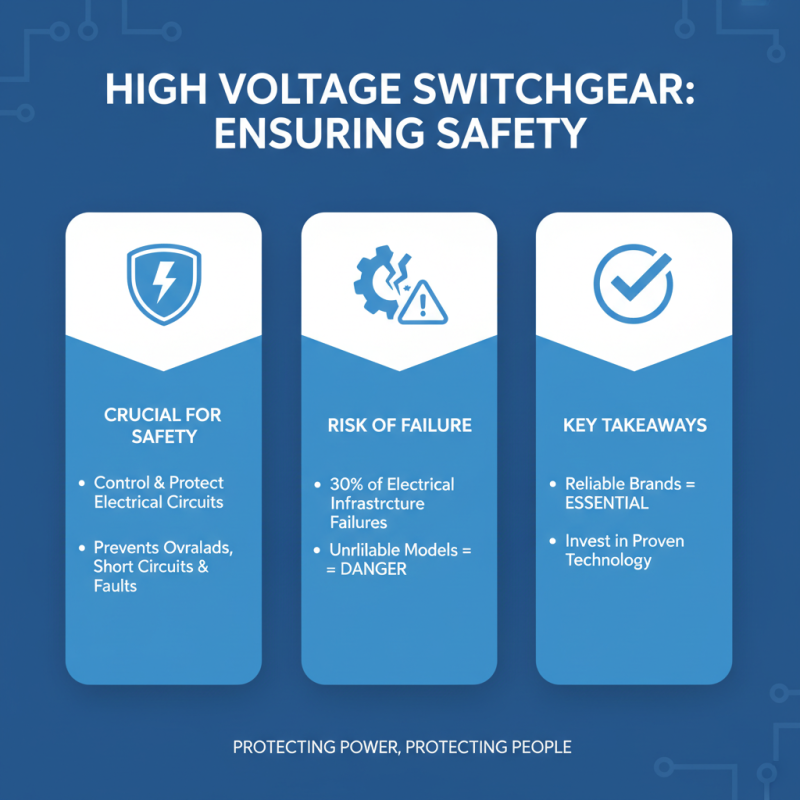
High voltage switchgears are crucial for maintaining electrical safety. They serve as control devices that protect electrical circuits from overloads, short circuits, and faults. According to industry reports, high voltage switchgears account for approximately 30% of electrical infrastructure failures. This emphasizes the need for reliable models and established brands in the market.
When selecting a high voltage switchgear, consider important factors like insulation type, durability, and ease of maintenance. Switchgears with solid insulation technology tend to provide better safety in harsh environments. A report from the Electrical Power Research Institute indicates that maintenance errors contribute to over 40% of switchgear failures. This illustrates the necessity for user-friendly designs that simplify maintenance procedures.
Innovations like digital monitoring systems enhance safety by providing real-time diagnostics. However, reliance on technology raises concerns about cybersecurity vulnerabilities. It is critical for operators to balance advanced features with traditional safeguards to ensure comprehensive safety. Investing in reliable switchgears can mitigate risks, but continuous evaluation and training are essential for optimal performance.
Innovative Technologies in High Voltage Switchgears for 2026
In 2026, high voltage switchgears are undergoing radical changes. Innovative technologies aim to improve electrical safety significantly. One notable trend is the integration of smart sensors. These sensors can detect faults quickly and assist in real-time monitoring. Improved responsiveness leads to less downtime and enhanced reliability.
Another key aspect is the use of eco-friendly materials. Many manufacturers are focusing on sustainable practices. This shift not only reduces environmental impact but also enhances durability. However, embracing new materials can sometimes lead to unexpected challenges in performance.
Tips: Regular maintenance is crucial. Schedule inspections to ensure everything functions optimally. Also, consider training for staff on the latest technologies. Knowledge can prevent potential hazards. Investing in technology should be balanced with assessments of effectiveness. Sometimes, new isn't always better. A thorough review can uncover hidden issues that need attention.
Future Trends in High Voltage Switchgear Development and Applications
The development of high voltage switchgears is influenced by several emerging trends. Increasing demand for renewable energy sources drives innovations. As of 2023, analysts predict that the global switchgear market will reach approximately $140 billion by 2026, reflecting a compound annual growth rate of over 5%. This growth calls for enhanced safety mechanisms and more reliable technologies.
Digitalization is another key trend. Smart grids utilize advanced monitoring systems and IoT technologies to improve operational efficiency. Real-time data analytics helps prevent potential failures. However, integrating these technologies into existing infrastructures poses challenges. Many companies struggle to balance technological upgrades with cost efficiency.
Sustainability is becoming a focal point in switchgear development, with eco-friendly materials being prioritized. Manufacturers are exploring alternatives to traditional insulating materials, which may be harmful to the environment. The push for sustainability requires careful consideration of performance metrics and long-term impacts. This journey toward safer and greener high voltage solutions continues to evolve.



 Send Email
 Phone
Phone whatsapp
 Wechat
 Whatsapp