The 2026 Brace Bolt supplier market deserves careful attention from global buyers. Demand is linked to infrastructure, renewable energy, industrial construction, and equipment maintenance. Grand View Research reports continued expansion across the global fasteners market, while MarketsandMarkets identifies construction and automotive applications as major demand drivers. However, published estimates differ because researchers define fasteners differently. That limitation matters.
A reliable supplier should provide material certificates, dimensional inspection records, coating details, and batch traceability. Buyers should also verify compliance with relevant specifications, including ISO 898-1, ASTM requirements, or project-specific engineering standards. Experience shows that small details often decide performance. Thread accuracy, washer fit, packaging moisture, and marking quality can prevent expensive site delays. A low quotation may hide weak documentation or inconsistent heat treatment.
John H. Bickford, author of Handbook of Bolts and Bolted Joints, expressed the core engineering idea simply: “A bolt is a spring.” His explanation reminds buyers to evaluate preload, joint design, and installation control, not appearance alone. This guide compares leading Brace Bolt suppliers using product quality, production capacity, export experience, testing practices, customization, and after-sales support. It also considers practical concerns, such as mixed-container shipments and replacement-part response times. No ranking is perfect. Supplier capabilities can change quickly, and regional data remains uneven. Buyers should therefore confirm current certifications, factory records, and sample results before signing contracts.
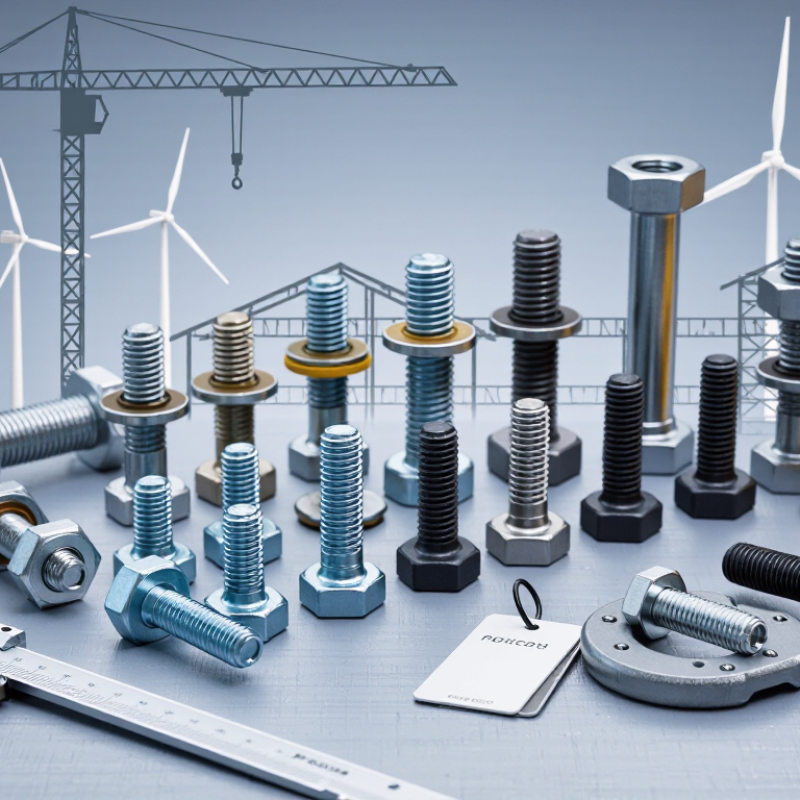
Brace bolts are fasteners used to connect diagonal braces with steel frames, gusset plates, brackets, or structural fittings. They usually include a threaded shank, nut, and washer. Depending on the design, the assembly helps resist tension, shear, vibration, or movement between connected members. The term is not perfectly uniform across industries. Some suppliers use it for structural bracing bolts, while others describe specialized bolts for equipment supports.
In steel buildings, brace bolts often secure cross-bracing in walls, roofs, and industrial frames. They also appear in pipe racks, solar support structures, machinery bases, and temporary access systems. In practical installation work, fit matters as much as strength. A bolt that is too short may not provide full thread engagement. A bolt that is too long can interfere with nearby components. Small details matter.
Global buyers should request the bolt diameter, length, thread type, material grade, coating, washer dimensions, and required tightening method. Drawings and load data are more reliable than a product photo. Test reports, batch traceability, and dimensional inspection records can also reduce purchasing risk. Corrosion protection deserves attention in coastal or humid locations. Still, coatings are not magic. Poor storage, damaged threads, or incorrect torque can weaken an otherwise suitable connection. Product terminology can remain confusing, so confirming the application with an experienced engineer is often worthwhile.
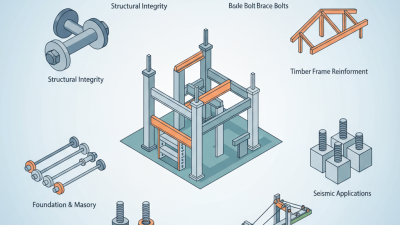
Brace bolts are high-strength fasteners used to connect diagonal braces, structural steel members, towers, frames, and other load-bearing assemblies. The chart shows the approximate tensile capacity of ISO 898-1 property class 8.8 bolts based on an 800 MPa nominal tensile strength.
Values are calculated from standard tensile-stress areas for coarse-thread metric bolts and are intended for preliminary comparison only. Final bolt selection must account for preload, shear, edge distance, connection design, corrosion protection, fatigue, and applicable structural standards.
2026 Top Brace Bolt Suppliers for Global Buyers
Global brace bolt buyers should begin with the standard, not the supplier catalogue. ISO 898-1 defines mechanical property classes such as 8.8 and 10.9 for carbon and alloy steel fasteners. ASTM F3125 covers structural bolts, including Grades A325 and A490. European projects may require EN 15048 for non-preloaded assemblies or EN 14399 for preloaded connections. These systems are not automatically interchangeable.
Dimensional details deserve equal attention. Confirm thread diameter, pitch, grip length, thread runout, head dimensions, and nut compatibility. ISO 4014 and ISO 4032 provide common bolt and nut references. For corrosion control, ISO 10683 addresses zinc-flake coatings, while hot-dip galvanizing requires separate specification and thickness checks. A dark coating is not proof of adequate protection. Ask for mill certificates, heat numbers, batch traceability, hardness results, tensile data, and coating measurements.
Demand is broadening. Grand View Research’s industrial fasteners outlook has estimated market growth at roughly 5% annually, while Research and Markets reports continued infrastructure and renewable-energy demand. That growth can encourage rushed substitutions. It happens. A certificate pack may still miss washer requirements or installation torque. Buyers should compare test methods, not only strength values. Packaging also matters: sealed cartons, legible lot labels, and moisture barriers can prevent rusty threads after a long sea shipment. Small details often decide whether a brace connection installs smoothly.
How to Evaluate Brace Bolt Suppliers in 2026
Global buyers should evaluate brace bolt suppliers through evidence, not polished catalog pages. The World Steel Association’s World Steel in Figures 2025 reported approximately 1.88 billion tonnes of crude steel production in 2024. That scale makes material traceability essential. Ask for heat numbers, chemical composition, tensile results, and matching mill certificates. A certificate without traceable batch records is weak evidence.
Check whether the supplier tests bolts against ISO 898-1 or the required structural-bolt specification, such as ASTM F3125. Confirm strength class, coating thickness, thread accuracy, and dimensional tolerance. Request recent third-party laboratory reports, not only internal inspection sheets. EN 10204 type 3.1 documentation can improve accountability. It should identify the material batch and inspection results clearly.
Audit the process behind the product. Review calibration records, sampling plans, nonconformance procedures, and packaging controls. Ask how bolts are protected from moisture during a six-week sea shipment. Small details matter: damaged threads, mixed lots, or unreadable labels can delay installation. Delivery reliability also deserves measurable proof. Compare quoted lead times with shipment records from the previous twelve months. No scorecard is perfect. I would still leave room for uncertainty, because even a capable supplier can fail during raw-material shortages. A trial order, independent inspection, and written corrective-action process offer stronger protection than promises.
| Evaluation Dimension | Reference Requirement or Benchmark | What Global Buyers Should Request | Suggested Weight | Priority | Relevant Reference |
|---|---|---|---|---|---|
| Product definition | Confirm whether the item is a structural brace bolt, general-purpose hex bolt, railway or utility bracing fastener, or a proprietary assembly. | Request a controlled drawing showing diameter, nominal length, thread length, head style, washer or nut requirements, tolerances, and intended application. | 10% | High | ISO 4014, ISO 4017, ASTM F3125, or the project-specific specification, as applicable. |
| Mechanical property class | For metric carbon-steel fasteners, common property classes include 8.8, 10.9, and 12.9. The selected class must match the engineering design. | Ask for the declared property class, tensile strength, proof load or yield information, hardness range, and batch-level test results. | 15% | High | ISO 898-1:2013, “Mechanical properties of fasteners made of carbon steel and alloy steel.” |
| Dimensional conformity | Threads, head dimensions, shank diameter, length, and geometric tolerances should comply with the selected product standard or approved drawing. | Require first-article inspection data, calibrated gauge records, thread inspection results, and a dimensional report for production lots. | 12% | High | ISO 4759-1, ISO 965 series, ASME B1.1, or the specified national thread standard. |
| Material traceability | Steel heat or cast information should remain traceable from raw material through finished fastener and packing documentation. | Request a material certificate with heat number, grade, chemical composition, manufacturer identification, and linkage to the shipment lot. | 10% | High | EN 10204:2004; the required inspection-document type should be stated in the purchase order. |
| Corrosion protection | Coating selection depends on exposure, service life, thread fit, hydrogen-embrittlement risk, and applicable environmental restrictions. | Specify coating type, nominal thickness, corrosion-test method, friction or torque-tension requirements, and whether post-treatment baking is required. | 12% | High | ISO 4042 for electroplated coatings; ISO 10683 for zinc-flake coatings; ASTM F1941 where applicable. |
| Hydrogen-embrittlement controls | High-strength fasteners, particularly hardened grades, require appropriate controls when electroplated or exposed to hydrogen-producing processes. | Request the supplier’s process control plan, baking parameters where applicable, lot identification, and embrittlement-prevention test evidence. | 10% | High | ISO 4042 and applicable customer or industry hydrogen-embrittlement requirements. |
| Quality management | A documented quality system should control purchasing, production, inspection, nonconforming product, corrective action, and record retention. | Request a current quality-management certificate, scope, expiry date, issuing body, audit status, and sample inspection records. | 10% | High | ISO 9001:2015. Certification should be independently verified with the issuing certification body. |
| Testing capability | Testing may include tensile, proof-load, hardness, coating thickness, torque-tension, salt-spray, and dimensional inspection, depending on the specification. | Confirm which tests are performed in-house, which are outsourced, the laboratory accreditation status, sampling frequency, and certificate format. | 10% | High | ISO/IEC 17025:2017 for testing and calibration laboratory competence; test methods depend on the product standard. |
| Lot consistency and sampling | Inspection results should represent a defined production lot and use a stated sampling plan rather than isolated samples only. | Request the lot definition, sample size, acceptance criteria, inspection level, and treatment of failed samples or mixed lots. | 8% | Medium | ISO 2859-1 may be used for attribute sampling when agreed by buyer and supplier. |
| Packaging and identification | Packaging must prevent corrosion, thread damage, contamination, and lot mixing during international transport and storage. | Specify package quantity, gross and net weight, pallet requirements, moisture protection, labels, barcode data, and lot-level traceability. | 6% | Medium | Buyer’s packaging specification, transport conditions, and destination-country marking requirements. |
| Export documentation | Documentation should support customs clearance, receiving inspection, and technical traceability. | Confirm availability of commercial invoice, packing list, certificate of origin where required, inspection certificate, material certificate, and shipment data. | 5% | Medium | Documentation requirements vary by destination country, contract terms, and product classification. |
| Lead-time reliability | Quoted lead time should distinguish tooling or sample approval, production, inspection, and ocean, air, or road transit time. | Request historical on-time delivery data, capacity confirmation, production-calendar assumptions, and a written escalation process for delays. | 7% | High | Use purchase-order performance data and agreed delivery terms; do not evaluate lead time from quotations alone. |
| Commercial transparency | Total landed cost includes unit price, tooling, testing, packaging, freight, insurance, duties, currency exposure, and payment costs. | Compare offers on the same specification and Incoterm, and request separate pricing for tooling, testing, coating, packaging, and logistics. | 5% | Medium | Incoterms® 2020 should be stated clearly in the quotation and purchase contract. |
International purchasing of brace bolts requires more than comparing unit prices. Buyers should assess thread accuracy, tensile strength, coating consistency, packaging, and export documentation together. The World Bank’s 2023 Logistics Performance Index shows that customs efficiency, shipment tracking, and delivery reliability strongly influence supply-chain performance. This matters when one missing certificate delays an entire steel assembly.
A qualified supplier should provide material test certificates, heat-number traceability, dimensional inspection records, and batch-level packing lists. For structural fasteners, buyers can request testing aligned with ISO 898-1 or relevant ASTM structural bolt specifications. Independent laboratory verification adds confidence, especially when orders cross multiple jurisdictions. It also exposes small issues, such as uneven galvanizing around the washer face. Those details are easy to miss.
Maritime transport carries over 80% of global merchandise trade, according to UNCTAD’s Review of Maritime Transport 2023. Therefore, brace bolt suppliers should explain lead times, port options, moisture protection, and replacement procedures before purchase. Salt-resistant wrapping and rigid cartons help protect threads during long voyages. A low price is not always a saving. Sometimes it is only delayed cost.
A practical supplier audit should include factory capacity, inspection staff, production photos, and recent export references. Video evidence helps, but it is not perfect. Physical samples still reveal more. Buyers should also confirm tolerances, marking methods, minimum order quantities, payment terms, and dispute handling in writing. A reliable supplier welcomes these questions, even when the process feels slower.
When comparing brace bolt suppliers, do not rank quotes by unit price alone. Build one comparison sheet with bolt grade, diameter, length, thread tolerance, coating, packaging, tooling, freight, and taxes. ISO 898-1 defines mechanical property requirements for carbon and alloy steel fasteners, but a certificate alone does not prove every shipment is consistent. Request batch-level test reports, dimensional records, coating thickness results, and sample photographs. A practical check is simple: measure several bolts from one sealed carton, not only the supplier’s sample.
Delivery terms require equal attention. The World Bank’s 2023 Logistics Performance Index assessed 139 economies and highlighted differences in customs, infrastructure, and shipment reliability. Ask suppliers to state production days, inspection time, port, Incoterm, and the latest booking date. UNCTAD reports that maritime transport carries over 80% of global trade by volume, so port congestion can affect a seemingly short lead time. Add a realistic buffer for vessel delays, document corrections, and destination clearance.
A strong quote shows assumptions clearly. Compare landed cost per usable bolt, not price per box. Confirm whether replacement parts, certificates, and export packaging are included. Ask for two delivery scenarios: normal and delayed. It feels excessive, but missed installation dates cost more than small price differences. I would also run a pilot order before approving annual volume. One weakness remains: forecasted delivery data can look precise while remaining uncertain. Treat it as evidence, not a promise.