Leave Your Message
Online Inuiry
53d365b3-6f89-4893-96a3-d70d895f9b81Wechat
27d442a5-5d9b-4e33-a816-996fe42856d8Whatsapp
6503fd048f54d46697

Top 10 Types of Surge Arrester Disconnectors

A Surge Arrester Disconnector is a small component with a critical protective role. It separates a failed surge arrester from the electrical system. This action helps prevent continued fault current and makes failures easier to identify. In practical installations, its position, operating speed, and coordination with protective devices matter greatly. A loose connection or unsuitable rating can change the outcome. Small details matter.

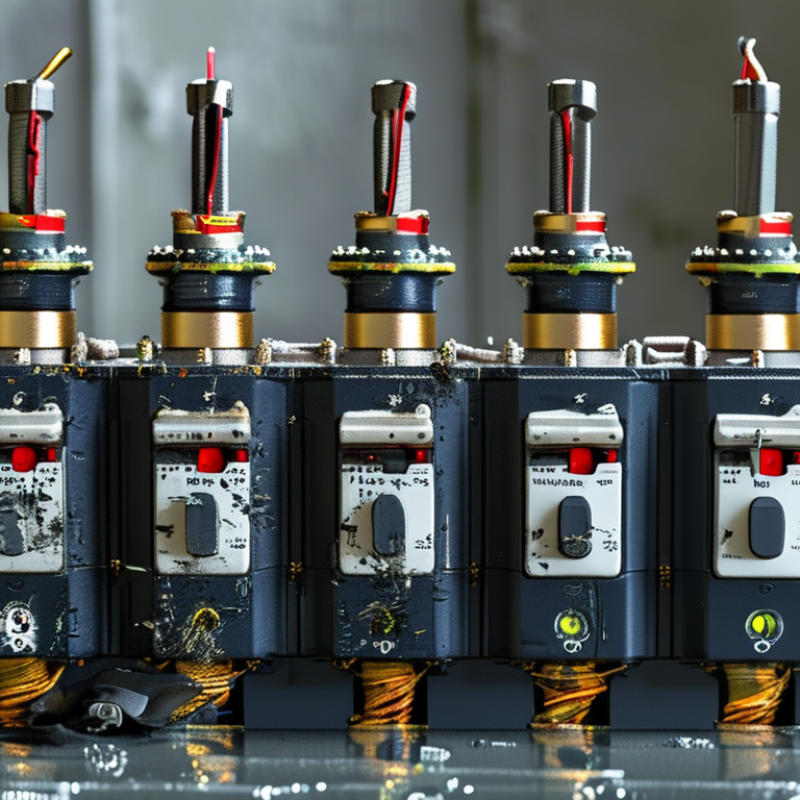
This guide explores the Top 10 Types of Surge Arrester Disconnectors used across distribution networks, substations, renewable energy systems, and industrial equipment. Each type reflects different requirements for voltage class, fault current, installation space, and maintenance access. Some use thermal release mechanisms. Others rely on explosive separation, mechanical movement, or integrated signaling features. Their designs may look similar, yet their responses under fault conditions can differ sharply. Visual similarity can mislead.

Reliable selection requires more than comparing product photographs or nominal ratings. Engineers should review manufacturer data, system short-circuit levels, environmental exposure, and applicable electrical standards. Field experience also shows that moisture, vibration, contamination, and aging can affect performance. No single disconnector fits every network. That point is easy to overlook. A careful evaluation should consider inspection records, coordination studies, and the consequences of equipment failure. This overview provides a structured starting point while recognizing an important limitation: real installations contain variables that simplified categories cannot fully describe. Professional judgment remains essential before specifying or replacing any Surge Arrester Disconnector.
Top 10 Types of Surge Arrester Disconnectors

Definition and Operating Principle of Surge Arrester Disconnectors

Top 10 Types of Surge Arrester Disconnectors

Definition and Operating Principle of Surge Arrester Disconnectors

A surge arrester disconnector is a protective device connected near an arrester’s ground path. It separates a failed arrester from the electrical system. This prevents a damaged unit from remaining connected during abnormal current flow. The disconnector does not normally operate during a short voltage surge. It responds when internal arrester failure creates sustained leakage current, heat, or fault energy.

During a lightning or switching surge, the arrester conducts excess voltage safely toward ground. Under normal voltage, it remains largely nonconductive. If its internal elements degrade, current and temperature can rise sharply. A thermal mechanism then releases a spring, separates the ground connection, and often provides a visible failure indication. Some designs use pressure-driven or expulsion-assisted action.

Field inspections show why correct coordination matters. The disconnector must operate before the arrester housing becomes dangerous, but it cannot disconnect during every temporary disturbance. A common mistake is treating it as a complete fault interrupter. It may not safely clear high fault current without upstream protection. Harsh weather, loose connections, and incorrect mounting can also affect performance. Small details matter. Technicians should check ground leads, separation distance, operating indicators, and enclosure condition during scheduled maintenance. Test records are useful, although they never replace physical inspection.


Classification Criteria for Surge Arrester Disconnector Types

Top 10 Types of Surge Arrester Disconnectors

Classification Criteria for Surge Arrester Disconnector Types

Surge arrester disconnectors are classified by how they respond to arrester failure, not by appearance alone. Common types include thermal, current-operated, explosive, expulsion, and mechanically linked disconnectors. Other practical categories include distribution-class, station-class, line-mounted, polymer-housed, and porcelain-housed designs. These labels can overlap. A polymer-housed unit may also use thermal separation.

The first criterion is operating behavior. A thermal disconnector reacts to heat from sustained leakage current. A current-operated design responds when fault current rises beyond its intended range. Expulsion types use internal gas pressure to separate the arrester and create visible evidence of failure. Mechanically linked versions coordinate with an external indicator or switching device. Selection depends on fault level, arrester energy, and the protection system’s clearing time.

Installation conditions form another important criterion. Line-mounted disconnectors face wind, rain, vibration, and limited maintenance access. Station installations usually require stronger coordination with grounding networks and nearby equipment. Housing material matters too. Polymer housings are lighter and resist shattering, while porcelain offers rigid mechanical support but needs careful handling. In field inspections, I check terminal corrosion, indicator position, and conductor slack. Small details matter.

Voltage class and coordination complete the classification. Low-voltage, medium-voltage, and high-voltage applications require different ratings and clearances. The disconnector must operate after arrester failure without creating unnecessary equipment damage. No single classification is perfect. Actual performance still depends on testing, installation quality, and fault conditions that may not appear in laboratory assumptions.

Top 10 Types of Surge Arrester Disconnectors - Classification Criteria for Surge Arrester Disconnector Types

No. Disconnector Type Primary Classification Criterion Operating Principle Typical Status Indication Typical Application and Selection Considerations
1 Thermal Disconnector Activation by sustained arrester leakage current and heat A thermal element responds to abnormal heating caused by prolonged power-frequency current. It releases a mechanical connection or separates the arrester from the circuit. Visible separation, a displaced flag, or an optional auxiliary contact Widely used with distribution-class metal-oxide arresters. The thermal response must be coordinated with the arrester’s thermal stability and the system fault-current level.
2 Explosive or Pyrotechnic Disconnector High-speed separation using a gas-generating actuator A controlled pyrotechnic or gas-producing device rapidly opens the arrester connection when a defined failure condition is detected. Mechanical position indicator and, in some designs, a remote alarm contact Used where rapid isolation and a clearly visible failed-arrester condition are important. Replacement procedures must address the spent actuator and safety requirements.
3 Pressure-Relief-Activated Disconnector Internal pressure generated during arrester failure Internal gas pressure operates a venting or mechanical release arrangement, helping to disconnect or isolate a failed arrester. Vent opening, detached lead, external flag, or inspection evidence Relevant to arresters designed with pressure-relief features. The arrester enclosure, vent direction, and installation clearances must be considered together.
4 Drop-Out or Falling-Lead Disconnector Gravity-assisted physical separation After activation, a hinged or flexible connection drops away from the arrester, creating a visible open circuit and improving fault identification. Clearly visible hanging lead or dropped terminal Commonly selected for overhead distribution lines where ground-level visual inspection is valuable. Mechanical clearance and wind movement should be checked.
5 Internal or Integral Disconnector Integration with the arrester housing The disconnecting mechanism is assembled inside, or directly integrated with, the arrester’s terminal structure and housing. External flag, altered terminal position, or an auxiliary indication device Provides a compact assembly with fewer exposed connections. Inspection access, replacement method, and compatibility with the arrester enclosure are essential.
6 External Series Disconnector Separate device installed in series with the arrester A separately mounted mechanism opens the conductor between the arrester and the protected circuit when the specified release condition occurs. External open position, flag, or auxiliary switch Useful when the disconnector must be replaceable or inspectable independently. Connection hardware, creepage distance, and coordination with protective devices require verification.
7 Visual-Indicator Disconnector Local maintenance indication A mechanical flag, color marker, or position indicator changes state when the disconnector operates, without requiring an energized measurement circuit. Color change, flag movement, or visible open position Suitable for installations where periodic patrols are practical. The indicator should remain readable from the intended inspection distance and under expected environmental conditions.
8 Remote-Signaling Disconnector Electrical status monitoring An auxiliary contact changes state when the arrester disconnector operates, allowing the condition to be transmitted to a control, alarm, or monitoring system. Dry contact, alarm circuit, or digital monitoring input Appropriate for substations, industrial facilities, and unmanned sites. Auxiliary-contact ratings, insulation coordination, wiring reliability, and fail-safe logic should be reviewed.
9 Low-Fault-Current Coordinated Disconnector Performance under limited power-frequency fault current The release mechanism is designed to operate for specified arrester failure currents while maintaining adequate coordination with the upstream protection system. Open mechanical position or optional remote indication Selected for systems where available fault current is relatively limited. The manufacturer’s current-time characteristics must be compared with the network protection settings.
10 High-Fault-Current-Rated Disconnector Withstand and interruption capability at higher fault current The disconnector and arrester assembly are designed to respond safely within a specified high-current short-circuit range, normally in coordination with upstream interruption. Visible separation, mechanical flag, or remote status contact Considered for substations and networks with substantial prospective fault current. Short-circuit testing, enclosure pressure relief, clearances, and system protection coordination are critical.
Classification note: These categories describe different ways of classifying surge arrester disconnectors. A single device may belong to several categories at the same time—for example, an externally mounted thermal disconnector with both visual and remote-status indication. Final selection should be based on the arrester’s rated voltage, continuous operating voltage, system grounding, prospective fault current, installation environment, and applicable requirements such as IEC 60099-4 or IEEE C62.11.

Top 10 Types of Surge Arrester Disconnectors

Top 10 Types of Surge Arrester Disconnectors

Surge arrester disconnectors separate failed arresters from energized circuits. Their design affects safety, maintenance, and fault visibility. The ten practical types include thermal, pressure-operated, spring-loaded, current-limiting, expulsion, drop-out, fuse-assisted, gap-type, integrated, and remote-indicating disconnectors. Each responds differently to leakage current, internal heating, and short-circuit energy.

IEC 60099-4 evaluates metal-oxide arresters through rated voltage, discharge current, and energy-duty requirements. IEEE C62.11-2020 commonly uses an 8/20 microsecond impulse wave and a 10-kiloampere nominal discharge current for testing. These figures matter during selection.

A thermal disconnector may release after sustained overheating. A pressure-operated design can react faster during internal failure.

Drop-out types provide a clear visual signal from ground level. Useful, but not universal.

CIGRE Technical Brochure 549 highlights the importance of failure detection, coordination, and safe disconnection in arrester applications. Field engineers should check prospective short-circuit current, enclosure material, installation height, and weather exposure. Polymer housings often reduce breakage risk, but they do not eliminate thermal damage. Remote indicators improve inspection records, although wiring faults can create false confidence.

My practical concern is simple: classifications vary between manufacturers and standards. Engineers should verify test evidence, not rely on a catalog label alone.

Key Differences Among the Ten Disconnector Types

Top 10 Types of Surge Arrester Disconnectors

Surge arrester disconnectors separate a failed arrester from the circuit, but their release methods differ. The ten common types include thermal, explosive, pressure-operated, spring-driven, fuse-link, drop-out, current-limiting, arc-quenching, visual-indicator, and remote-signaling designs. Thermal types react to sustained leakage heat, while pressure-operated versions respond to internal gas pressure. Explosive and spring-driven models act faster, but they need careful coordination with enclosure safety. Fuse-link types provide predictable interruption. Drop-out designs create a visible gap for easier inspection. Current-limiting units reduce fault energy, while arc-quenching designs control the resulting arc. Visual-indicator types support local checks. Remote-signaling versions send an alarm to a control room.

These categories can overlap. That detail matters.

In field inspections, the real difference appears after failure. A drop-out unit may hang visibly below the arrester, while a sealed thermal unit can leave little external evidence. Remote signaling improves maintenance response, but it adds wiring, testing, and possible communication faults.

Pressure-based models suit applications where internal rupture is a concern. Spring mechanisms often offer simple operation, though corrosion can weaken moving parts.

The best choice depends on fault current, arrester rating, weather exposure, clearance, and utility procedures. A neat classification is useful, but never complete.

Tips:

Check the manufacturer’s operating curve, short-circuit rating, and installation position. Test remote contacts before energizing equipment. Inspect terminals for heat marks and moisture. Do not judge performance from appearance alone. In practice, selection mistakes usually begin with incomplete site data.

How to Select the Right Surge Arrester Disconnector

Top 10 Types of Surge Arrester Disconnectors

How to Select the Right Surge Arrester Disconnector

Selecting a surge arrester disconnector starts with the network, not the product label. Common options include gapless metal-oxide, gapped, distribution, intermediate, station, polymer-housed, porcelain-housed, line, transformer-neutral, and GIS designs. NOAA estimates that the United States experiences about 25 million lightning flashes annually. That exposure makes discharge capability a practical design concern. IEC 60099-4 groups arresters into five line-discharge classes. Higher classes generally suit systems facing greater switching energy.

Check the system’s maximum continuous operating voltage, grounding method, temporary overvoltage, and expected fault current. The disconnector must operate safely after arrester failure. CIGRE Technical Brochure 549 emphasizes thermal stability, energy coordination, and accurate system studies. Housing material also matters. Polymer housings reduce breakage risk, while porcelain may offer strong mechanical performance but requires careful installation. Coastal salt, industrial dust, altitude, and ice can change the choice. A laboratory rating is not enough. Field conditions are less tidy.

Tips: Match the disconnector’s fault-interrupting rating with the available short-circuit current. Confirm arrester residual voltage against the insulation coordination study. Leave visible clearance around the disconnector. Photograph cable routing during inspection. It helps later. Review leakage-current trends and grounding resistance regularly. A neat spreadsheet can still miss a loose earth connection or water trapped inside a terminal. That is where selection becomes judgment, not just calculation.