Leave Your Message
Online Inuiry
53d365b3-6f89-4893-96a3-d70d895f9b81Wechat
27d442a5-5d9b-4e33-a816-996fe42856d8Whatsapp
6503fd048f54d46697

China Top 10 Line Hardware Manufacturers for Global Buyers

Choosing reliable suppliers is critical when sourcing Line Hardware from China for international projects. Transmission towers, substations, and distribution networks depend on small components that must perform under wind, vibration, corrosion, and repeated mechanical stress. A failed clamp or poorly finished bolt can delay installation and increase maintenance costs.

This guide introduces China’s top 10 Line Hardware manufacturers for global buyers. The selection focuses on manufacturing experience, product range, material control, testing practices, export capability, and customer support. Practical details matter. Buyers should examine galvanized coating thickness, steel grades, thread accuracy, load ratings, inspection records, and packaging methods. Clear drawings and traceable batch information also reduce mistakes during approval and installation.

Some manufacturers may appear strong on paper but require closer verification. Factory audits, sample testing, and recent project references remain valuable. Certifications help, but they do not replace independent inspection. Lead times can also change when raw material prices, port schedules, or production capacity shift. That is easy to overlook.

The ranking is therefore a practical starting point, not an absolute verdict. A supplier that suits a coastal power project may not fit an inland railway electrification system. Buyers should compare technical specifications, communication speed, warranty terms, and compliance with local standards. Small differences often matter. By combining documented evidence with direct supplier discussions, procurement teams can make more confident and responsible decisions.

China Top 10 Line Hardware Manufacturers for Global Buyers

What Line Hardware Is and Why Global Buyers Need Reliable Manufacturers

Line hardware refers to the fittings that support, connect, protect, and control overhead power lines. Common examples include clamps, connectors, suspension fittings, tension fittings, and protective devices. These parts transfer mechanical loads and maintain electrical clearance. Details matter. A small surface defect can lead to corrosion, slippage, or early failure.

Global buyers need reliable manufacturers because line hardware operates outdoors for years. Rain, ice, wind, heat, and vibration can test every connection. Experienced Chinese manufacturers usually combine material inspection, precision machining, forging, casting, and surface treatment. They should also provide dimensional records, load tests, chemical reports, and traceable production batches. Good documentation is not decoration. It helps engineers verify performance before shipment.

Supplier evaluation should include factory capability, quality controls, export experience, packaging, and delivery consistency. Samples should match approved drawings, not merely look similar. Specifications can still be misunderstood. That risk is real. Clear tolerances, coating requirements, installation conditions, and testing methods reduce costly revisions. Buyers should ask how rejected parts are handled and whether corrective actions are recorded. A dependable manufacturer communicates problems early, even when the news is uncomfortable. Price remains important, but unstable quality can create replacement work, project delays, and field safety concerns.

How China’s Line Hardware Manufacturing Industry Is Organized

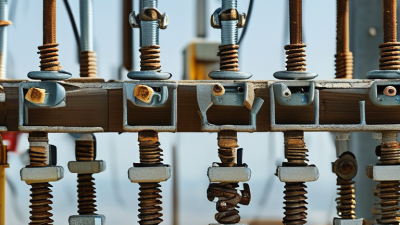
China’s line hardware manufacturing industry is organized through regional clusters, specialized factories, and trading companies. Production often concentrates near ports, metalworking centers, and electrical equipment markets. This arrangement shortens delivery routes and improves access to steel, aluminum, copper, and surface-treatment services.

Most manufacturers focus on one production stage. A forging workshop may produce clamps, while another factory handles stamping, machining, coating, or assembly. Larger suppliers coordinate several stages under one management system. Smaller suppliers usually depend on nearby partners. This creates flexibility, but quality can vary between batches. Factory visits often reveal more than catalogs. Material storage, mold maintenance, and inspection records show how seriously a supplier controls production.

For global buyers, the supply chain usually includes manufacturers, exporters, inspection agencies, and freight providers. Experienced buyers check drawings, load requirements, corrosion conditions, and packaging details before placing orders. They also request material certificates, dimensional reports, and sample approval. Some suppliers provide traceability from raw material to final packing. Others offer incomplete records. That weakness should not be ignored. A reliable assessment combines technical documents with production experience, clear communication, and independent verification. Price is only one signal. Even a polished factory can miss a small tolerance that affects installation. Regular audits and field feedback help expose that risk.

China’s Top 10 Line Hardware Manufacturers and Their Core Products

China Top 10 Line Hardware Manufacturers for Global Buyers

China’s top ten line hardware manufacturers serve different sections of overhead power networks. One specializes in suspension and tension clamps for bare conductors. Another produces piercing connectors, terminal lugs, and parallel groove clamps. A third focuses on spacer dampers for bundled conductors. Other leading manufacturers supply insulators, cross-arm fittings, grounding accessories, guy wire assemblies, pole-line brackets, and vibration-control devices. Their core products commonly use forged aluminum, galvanized steel, stainless steel, or reinforced polymers. Product drawings should match conductor size, loading conditions, and installation methods.

Tips: Request material certificates, dimensional reports, and type-test records before purchasing. Check whether samples match mass-production items. Ask for salt-spray results when hardware will face coastal moisture. A factory audit can reveal basic issues, such as poor storage or inconsistent coating thickness. Small details matter.

Reliable sourcing requires more than comparing prices. Review mold control, torque testing, traceability, and packaging protection. A strong manufacturer should explain failure risks in plain language, not only display polished catalogs. However, even experienced suppliers can make mistakes during custom production. Confirm every tolerance in writing. It is also wise to inspect trial batches before approving larger orders. Some buyers overlook installation tools, replacement parts, and field instructions. That decision often creates avoidable delays. A practical supplier understands the complete hardware system, from warehouse handling to final pole installation.

China Top 10 Line Hardware Manufacturers for Global Buyers - China’s Top 10 Line Hardware Manufacturers and Their Core Products

No. Manufacturer Capability Profile Core Products Common Materials Applicable International Standards Typical Applications Key Buyer Checks
1 Overhead Conductor Fittings Suspension clamps, tension clamps, repair sleeves, jumper terminals Aluminum alloy, forged steel, ductile iron, galvanized steel IEC 61284; IEC 61854 where spacers are included Transmission and distribution overhead lines Conductor diameter range, rated breaking load, slip strength, corrosion protection
2 Pole Line Hardware Pole bands, crossarm brackets, guy clamps, cable support brackets Hot-dip galvanized steel, stainless steel, aluminum alloy ASTM A123/A123M; ASTM A153/A153M for galvanized components Wood, concrete and steel utility poles Pole diameter compatibility, coating thickness, bolt grade, hole pattern
3 Insulator Mounting Hardware Insulator pins, clevises, yoke plates, ball-and-socket fittings Forged steel, malleable iron, ductile iron, aluminum alloy IEC 60120; IEC 60383 series; IEC 61284 Pin, suspension and strain insulator assemblies Coupling dimensions, mechanical failing load, locking arrangement, galvanizing quality
4 Guying and Anchoring Components Guy grips, anchor rods, guy plates, thimbles, strand clamps Galvanized carbon steel, stainless steel, ductile iron ASTM A475; ASTM A153/A153M; project-specific utility specifications Pole stabilization, transmission structures and utility networks Strand size, ultimate strength, thread dimensions, pull-out and tensile test reports
5 Spacer and Vibration-Control Hardware Bundle spacers, spacer dampers, Stockbridge dampers, armor rods Aluminum alloy, galvanized steel, elastomer components IEC 61854; IEC 61284 Single, twin and bundled conductor lines Bundle spacing, fatigue performance, conductor diameter, vibration test data
6 ADSS and OPGW Accessories Dead-end assemblies, suspension sets, down-lead clamps, storage racks Aluminum alloy, galvanized steel, polymer inserts, stainless steel IEC 60794 series; IEC 61284; applicable utility specifications Aerial fiber-optic and shield-wire installations Cable diameter, rated tensile load, bend radius, optical attenuation impact
7 Distribution Line Connectors Parallel-groove clamps, bolted connectors, compression connectors, tap connectors Aluminum, tinned aluminum, copper alloy, aluminum alloy IEC 61238-1; applicable conductor standards such as IEC 61089 Low-voltage and medium-voltage distribution networks Conductor compatibility, contact resistance, thermal cycling, installation torque
8 Grounding and Earthing Hardware Earth clamps, grounding connectors, bonding jumpers, ground rods and accessories Copper, copper alloy, galvanized steel, stainless steel IEC 62561 series; IEEE 80 for substation grounding design references Substations, utility poles, towers and cable systems Conductor range, fault-current capacity, corrosion resistance, installation method
9 Transmission Tower Hardware Tower bolts, U-bolts, clevis plates, suspension assemblies, tower accessories High-strength carbon steel, alloy steel, hot-dip galvanized steel ISO 898-1; ASTM A394; ASTM A123/A123M Steel lattice towers and high-voltage transmission corridors Bolt grade, thread accuracy, torque requirements, coating uniformity, traceability
10 Custom Line Hardware and OEM Assemblies Machined fittings, forged parts, stamped brackets, assembled line-hardware kits Carbon steel, stainless steel, aluminum alloy, copper alloy IEC 61284; ISO 9001 quality-management framework; buyer specifications EPC projects, utility upgrades and non-standard line configurations Approved drawings, dimensional inspection, material certificates, prototype validation
Note: The profiles above are presented without company or brand names. Standards and product requirements should be confirmed against the destination country, utility specification and project tender documents.

How to Compare Chinese Line Hardware Suppliers for Global Projects

China Top 10 Line Hardware Manufacturers for Global Buyers

Comparing Chinese line hardware suppliers requires more than checking unit prices. In field procurement, I review drawings, material certificates, coating records, and sample dimensions before discussing volume. A lower quotation can hide thicker tolerances, weaker packaging, or expensive rework.

IEA’s 2023 Electricity Grids report says annual global grid investment must rise from about USD 300 billion to over USD 600 billion by 2030. That pressure makes reliable hardware sourcing essential. Ask suppliers to match applicable IEC or ASTM requirements, including mechanical strength, corrosion resistance, and dimensional control. Request third-party test reports, not only factory declarations. Check whether the tested sample matches the production drawing.

Production evidence matters. Compare monthly capacity, inspection equipment, heat-treatment records, and traceability from steel batch to shipment. World Bank’s 2023 Logistics Performance Index evaluates six areas, including customs, infrastructure, tracking, and delivery timeliness. Use those categories when reviewing export performance. Ask for recent shipment records, packaging photos, and documented lead times.

Small details reveal weaknesses. Are holes clean after galvanizing? Do threaded fittings assemble without forcing? A spreadsheet can still lie. I would also audit communication, because unclear revisions often create costly mistakes. No supplier is perfect. Even a strong factory may struggle with peak-season capacity, so buyers should verify backup processes, corrective-action speed, and inspection access before signing long-term contracts.

Quality, Compliance, Pricing, and Export Factors for International Buyers

China Top 10 Line Hardware Manufacturers for Global Buyers

Selecting among China’s top line hardware manufacturers requires more than comparing unit prices. International buyers should verify tensile-strength reports, salt-spray results, dimensional tolerances, and traceability records. Products should match relevant IEC requirements and the buyer’s local grid specifications. Factory audits also reveal practical details, such as calibration habits, packaging quality, and whether inspectors record rejected parts.

Pricing needs a wider view. Steel, aluminum, tooling, testing, inland transport, and export documentation can change the final cost. The WTO’s Global Trade Outlook and Statistics projected merchandise trade growth of 2.6% in 2024 and 3.3% in 2025, showing why freight planning remains important. The World Bank’s 2023 Logistics Performance Index reported that only 44% of shipments reached destinations within the expected time. Delays happen.

Request a full landed-cost quotation, not only a factory price. Ask about minimum order quantities, spare parts, inspection timing, and payment protection. Export-ready suppliers should provide packing lists, certificates of origin, inspection reports, and clear HS classification support. Compliance claims still need independent checking. I have seen attractive quotations fail during installation because hole spacing was assumed, not confirmed. That mistake is expensive. A stronger shortlist compares evidence, not promises. Even experienced buyers can miss corrosion risks when samples are tested indoors, far from coastal air, heavy rain, or polluted industrial environments.