2026 Top Cableterminal And Joints Innovations and Trends?
The cable terminal and joints industry is undergoing significant innovations and trends as we approach 2026. Industry reports indicate a projected market growth of 5% annually within this sector. Key advancements in materials and technology are driving improvements in performance and reliability. Experts highlight that efficient cable terminals and joints can enhance power distribution systems.
Dr. Emily Tran, a noted expert in electrical engineering, states, "The future of cable terminals and joints lies in smart technology integration." Her insights reflect the trend toward automation and monitoring systems. These innovations can reduce maintenance costs and improve operational efficiency.
While progress is evident, challenges still exist. The complexity of integrating new technologies can pose risks. Industry stakeholders must address compatibility issues and training needs. Continuous research and development remain critical. The industry must strive for a balance between innovation and practical application to ensure reliable solutions for end-users in the electrical infrastructure.

2026 Innovations in Cable Terminal Technology: Key Developments
The cable terminal and joint technology sector is rapidly evolving. In 2026, innovations will focus on enhancing efficiency and reliability. According to the global cable market report by MarketsandMarkets, the cable accessory market is expected to grow by over 8% annually. This growth is driven by rising energy needs and infrastructure upgrades.
Recent advancements in materials science are notable. High-performance polymers and composite materials improve durability and performance in extreme conditions. These innovations help reduce maintenance costs for utilities. Reports from the International Electrotechnical Commission highlight the importance of reliable cable connections in renewable energy sectors.
Emerging trends include smart cable technology. Embedded sensors within cable terminals can monitor performance and predict failures. This shift towards digitalization improves operational efficiency. However, the integration of new technologies presents challenges. Training personnel and adapting existing systems can be difficult and costly. Companies must navigate these complexities while striving for innovation.
Emerging Trends in Cable Joint Design for Enhanced Performance
The cable joint design industry is witnessing transformative changes. Emerging trends focus on enhancing performance and reliability. For example, reports suggest that innovations in material science are crucial. Composite materials offer better insulation and strength, addressing the need for durability under extreme conditions.
Industry data indicates a shift towards modular joint designs. Such designs simplify installation and maintenance. A recent survey highlighted that 45% of professionals prefer modular solutions. This reflects growing recognition of their efficiency. Additionally, telecommunication requirements push for smaller, more robust joints. The demand for high-speed connectivity influences design priorities.
However, challenges remain. Achieving optimal heat dissipation is vital, yet many designs struggle in this area. The industry must explore advanced thermal management techniques. Furthermore, while trends encourage flexibility, balancing this with structural integrity can be complex. Ongoing R&D is essential to address these dilemmas, ensuring sustainable innovations in cable joint design.
2026 Innovations in Cable Terminal and Joints
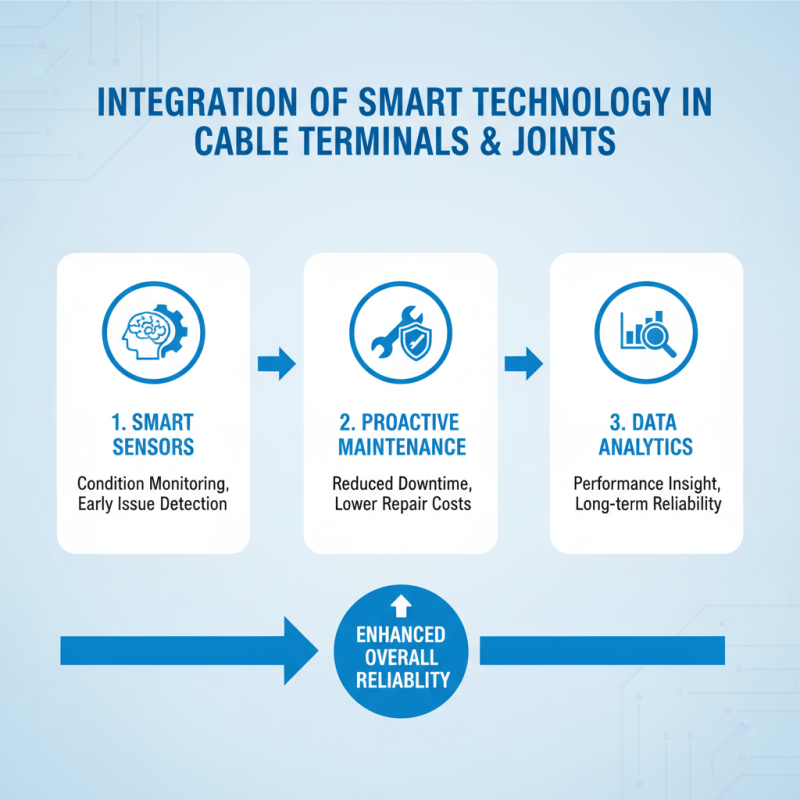
Integration of Smart Technology in Cable Terminals and Joints
The integration of smart technology into cable terminals and joints represents a significant trend in the industry. Smart sensors improve condition monitoring. They detect potential issues before they escalate. This proactive approach can reduce downtime and repair costs. Data analytics allows for better understanding of cable performance over time. When combined, these technologies enhance overall reliability.
However, this transition faces challenges. Not all installations can easily adopt smart solutions. Compatibility with existing systems can be a hurdle. The upfront costs may deter some companies from investing in new technology. Continuous training for personnel is also necessary to keep pace with advancements. Despite these obstacles, the potential benefits are undeniable.
Adopting new technology requires careful consideration. Not every innovation will fit all scenarios. Conducting thorough assessments can help identify the right applications. Ultimately, the move towards smarter cable terminals is aimed at improving efficiency. As more projects embrace this shift, the industry can expect to see increased safety and performance.
Sustainability Trends: Eco-Friendly Materials in Cable Applications
Sustainability is transforming the cable industry. Eco-friendly materials are gaining momentum in cable applications. Industries are increasingly prioritizing sustainable practices. This shift reflects a broader commitment to reducing environmental impact. Companies explore innovative bioplastics and recycled materials for cable components. These materials offer performance while minimizing ecological footprints.
The challenge is balancing performance with sustainability. Many eco-friendly materials still cannot compete with traditional options in durability or cost. As research progresses, engineers are testing new composites. The goal is to enhance performance without sacrificing the environment. Innovations in material science hold promise, yet results are mixed. There is still much to learn about long-term performance and recyclability.
Collaboration among engineers, material scientists, and environmentalists is crucial. Their efforts can lead to breakthroughs in cable technology. Note that the path to sustainability is often imperfect and complex. Awareness of failures in material development can guide future improvements. Progress requires ongoing reflection and adaptation to emerging trends.
Market Projections: Growth of Cable Terminals and Joints by 2026
The market for cable terminals and joints is poised for substantial growth by 2026. Industry experts anticipate that advancements in materials and design will drive this expansion. Innovative solutions are crucial for enhancing efficiency and reliability in electrical systems. Manufacturers are focusing on developing lightweight, durable terminals that minimize connection failures.
Sustainability has become critical in this sector. Companies are exploring eco-friendly materials to reduce their carbon footprint. This shift could lead to new trends in production and recycling processes. However, challenges exist. The transition to greener alternatives may increase costs and complicate logistics.
At the same time, digital technologies are emerging as game-changers. Smart cable joints equipped with monitoring systems can predict failures. Their adoption indicates a significant shift toward proactive maintenance. Yet, integration remains a hurdle for many businesses. Aligning traditional practices with these innovations requires careful planning and adaptation.



 Send Email
 Phone
Phone whatsapp
 Wechat
 Whatsapp