Leave Your Message
Online Inuiry
53d365b3-6f89-4893-96a3-d70d895f9b81Wechat
27d442a5-5d9b-4e33-a816-996fe42856d8Whatsapp
6503fd048f54d46697

2026 Best Power Transformer Types for Global Buyers?

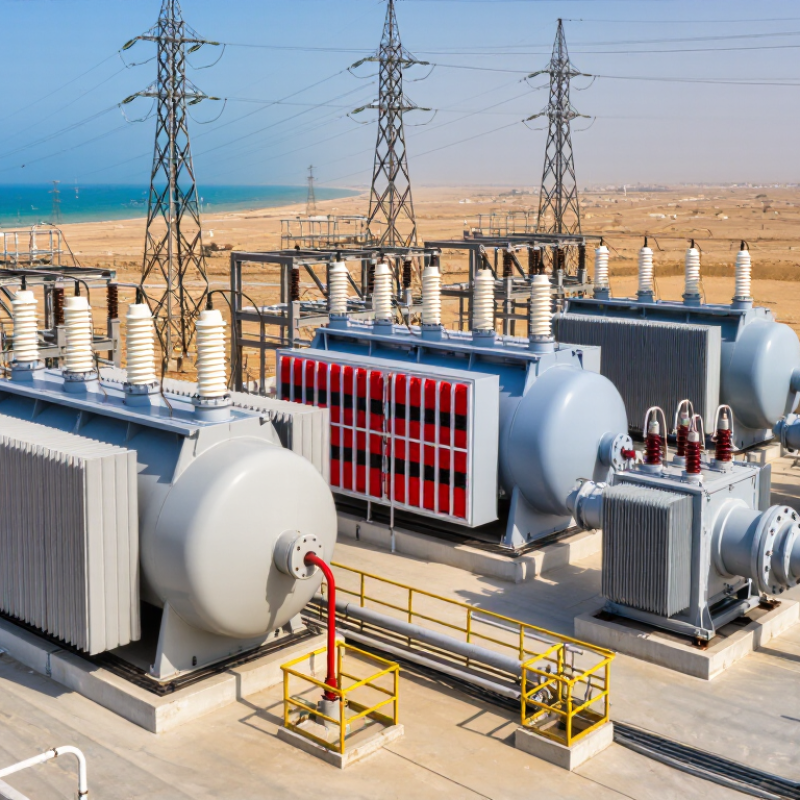
Choosing the best power transformer in 2026 requires more than comparing price tags or nameplate ratings. Global buyers must match transformer design with grid voltage, climate, load behavior, maintenance capacity, and transport conditions. A 220 kV utility substation needs different protection and cooling than a factory receiving medium-voltage power. The right choice depends on the application.

This guide examines oil-immersed, dry-type, distribution, power, autotransformer, and renewable-energy transformer options. It considers efficiency, insulation strength, fire safety, noise, lifecycle cost, and service access. In coastal regions, salt-laden air can accelerate corrosion around radiators and bushings. In desert projects, dust and 45°C ambient temperatures can challenge cooling performance. These details matter.

Reliable purchasing decisions should reference applicable IEC 60076 or IEEE C57 requirements, local grid codes, and verified factory test reports. Buyers should also review short-circuit strength, partial-discharge results, temperature-rise data, and warranty coverage. Experienced engineers can identify risks that brochures often hide. Still, no global ranking is perfect. A low-loss transformer may require a higher upfront investment, while a compact dry-type unit may not suit every outdoor site. I may overlook emerging designs or regional supply differences. That is worth admitting. Careful buyers should request independent technical reviews, inspect production quality, and compare total ownership costs before committing. The strongest option is not always the newest one. It is the one that performs reliably, remains serviceable, and fits the project’s real operating conditions.

2026 Best Power Transformer Types for Global Buyers?

Power Transformer Basics: Ratings from 10 MVA to 1,000 MVA at 50/60 Hz

Choosing a power transformer starts with the MVA rating, not the enclosure color or purchase price. Ratings commonly range from 10 MVA to 1,000 MVA. A 10 MVA unit may serve an industrial plant or regional substation. A 1,000 MVA transformer usually supports major transmission networks and requires extensive transport planning.

Frequency matters too. Transformers designed for 50 Hz and 60 Hz systems have different magnetic and thermal requirements. Core flux, losses, cooling performance, and insulation coordination must match the operating frequency. Engineers should also review voltage ratio, tap range, short-circuit impedance, altitude, ambient temperature, and expected load growth. A transformer operating near its limit every afternoon may age faster than its nameplate suggests.

Real projects need evidence, not assumptions. Buyers should request routine and type-test records, temperature-rise data, noise values, oil quality requirements, and factory inspection plans. International specifications often reference IEC 60076 or applicable IEEE standards. Installation teams must confirm foundation loading, bushing clearance, fire protection, and transport dimensions before ordering. Small details become expensive later.

Bigger is not always better. Oversizing can increase losses and reduce operating efficiency at light load. Undersizing leaves little room for expansion. A neat spreadsheet can still mislead. Site conditions, maintenance skills, grid stability, and future demand deserve equal attention. Some early designs also overlook harmonic currents from modern power electronics. That mistake deserves a second review.

2026 Best Power Transformer Types for Global Buyers

Power Transformer Basics: Common Nameplate Ratings from 10 MVA to 1,000 MVA at 50/60 Hz

The chart presents representative power-transformer nameplate ratings commonly specified for industrial facilities, renewable-energy collection systems, transmission substations, and interconnected grid networks. Actual ratings depend on system voltage, load growth, cooling method, short-circuit duty, insulation level, and local utility standards. Transformers may be designed for either 50 Hz or 60 Hz operation when specified accordingly.

Oil-Immersed Transformers: IEC 60076 Designs and Efficiency Above 99%

For global buyers in 2026, oil-immersed transformers remain a practical choice for high-voltage networks. Their sealed tanks, mineral oil insulation, and efficient cooling support stable operation in substations. Designs tested under IEC 60076 should state rated power, frequency, temperature rise, impedance, and loss measurements clearly. A credible factory report matters more than a sales percentage.

Efficiency above 99% is achievable, but only under defined conditions. A 1,000 kVA unit with 99.2% efficiency still loses about 8 kW at its tested load. Actual performance changes with loading, ambient temperature, harmonics, and maintenance. The U.S. Department of Energy’s transformer technical studies commonly place distribution-transformer efficiency near 98% to 99.5%, depending on size and operating conditions. The European Commission’s Ecodesign Regulation 2019/1783 also limits allowable no-load and load losses for medium-power transformers.

Look closely at the details. IEC 60076-1 testing should separate no-load loss from load loss, while temperature correction should be documented. Conservator tanks, sealed designs, and low-loss core steel each affect lifetime performance. Oil quality must be checked through dissolved-gas analysis and moisture testing. Small oversights can erase expected savings. A 99% claim without a loading curve is incomplete. Engineers should compare five-year loss costs, not only purchase prices. This is where buyer judgment still matters.

Dry-Type Transformers: Cast-Resin Options for Indoor and Fire-Sensitive Sites

2026 Best Power Transformer Types for Global Buyers?
Dry-Type Transformers: Cast-Resin Options for Indoor and Fire-Sensitive Sites

Cast-resin transformers suit hospitals, tunnels, commercial towers, and industrial rooms. Their windings are sealed in epoxy resin, without liquid insulation. This reduces leakage concerns and limits fire load. However, cast resin is not fireproof. Severe heat can still damage the enclosure and insulation.

The IEA Electricity 2024 report forecasts global electricity demand to grow by about 3.4% annually from 2024 to 2026. More indoor substations will need compact, efficient equipment. The U.S. Department of Energy’s 2024 distribution transformer rule estimates 16.31 quadrillion Btu in energy savings over 30 years. Efficiency matters, but buyers should examine no-load losses, load losses, sound levels, and temperature rise together. IEC 60076-11 provides useful dry-type classifications, including fire behavior and environmental performance. A perfect specification is rarely possible.

Tips: Confirm the site’s altitude, humidity, dust, ventilation, and short-circuit level. Request routine test records and temperature-rise data. Use AN or AF cooling only after checking actual load cycles. Do not assume indoor installation means maintenance-free. In field reviews, poor airflow remains a common mistake. Leave practical clearance around the transformer, even when floor space is limited.

2026 Best Power Transformer Types for Global Buyers? – Dry-Type Transformers: Cast-Resin Options for Indoor and Fire-Sensitive Sites

Comparison of common cast-resin dry-type transformer configurations for indoor substations, commercial facilities, industrial plants, renewable-energy systems, and fire-sensitive installations.

Cast-Resin Option Typical Application Typical Rated Power Range Common Voltage Range Cooling Method Fire and Environmental Profile Installation Conditions Main Advantages Key Selection Considerations
Basic AN Cast-Resin Transformer Indoor distribution in offices, hospitals, schools, shopping centers, and light industrial buildings 100 kVA–3,150 kVA Low voltage systems up to 1.1 kV; medium-voltage windings commonly 3.3–24 kV, with higher ratings available by design AN: natural air cooling No insulating liquid; low risk of liquid leakage and reduced fire load compared with oil-filled units Clean, dry indoor rooms with adequate ventilation; normally installed on a level foundation Simple operation, limited routine maintenance, good moisture resistance after proper curing, and suitable for buildings Heat dissipation depends on room ventilation; verify noise level, enclosure rating, clearances, and harmonic loading
AN/AF Cast-Resin Transformer Facilities with variable load demand, compact substations, data centers, transport infrastructure, and industrial distribution 250 kVA–5,000 kVA Commonly used with medium-voltage systems from 3.3–24 kV and low-voltage outputs up to 1.1 kV AN under normal load; AF forced-air cooling using fans for additional capacity Dry construction with no oil containment requirement; forced-air operation can increase available capacity for limited periods Indoor installation with fan access, temperature monitoring, and a suitable ventilation or heat-extraction system Higher short-term or continuous capacity than an equivalent AN-only design; flexible load management Fan power, maintenance, acoustic noise, and control-system reliability must be included in the design review
Low-Loss Energy-Efficient Cast-Resin Transformer Buildings and networks with high annual operating hours, electricity-cost controls, or energy-efficiency targets 100 kVA–3,150 kVA Typical medium-voltage primary ratings of 6–24 kV; low-voltage secondary ratings commonly 400–690 V Usually AN; AN/AF versions are also available Dry, non-oil construction with reduced operating losses when specified with optimized core and winding design Indoor or protected outdoor installation, subject to the manufacturer’s enclosure and environmental limits Lower no-load and load losses can reduce lifetime energy consumption and operating cost Compare guaranteed losses at the actual load profile; a higher purchase price may be justified by lifecycle savings
High-Humidity and Condensation-Resistant Cast-Resin Transformer Coastal buildings, water-treatment facilities, basements, marine-adjacent sites, and locations with frequent humidity changes 160 kVA–3,150 kVA Commonly available for medium-voltage systems from 3.3–24 kV and low-voltage systems up to 1.1 kV AN or AN/AF Encapsulated windings provide improved resistance to moisture compared with unencapsulated dry windings; the complete installation still requires protection from standing water Use space heaters, anti-condensation controls, or a climate-controlled room where condensation is possible during shutdown Suitable for demanding indoor environments when enclosure, ventilation, and anti-condensation measures are correctly designed Cast resin does not make the transformer waterproof; check humidity, salt, pollution, ingress protection, and drainage requirements
Low-Noise Cast-Resin Transformer Hotels, residential developments, hospitals, laboratories, offices, and sound-sensitive commercial areas 100 kVA–2,500 kVA Typical primary voltages of 6–24 kV; secondary voltage selected for the local distribution system Normally AN to minimize fan noise; AF cooling may be specified when required Dry construction with no oil-filled tank; acoustic performance depends on both transformer design and room construction Install on vibration-isolating supports where appropriate; avoid rigid connections that transmit structure-borne noise Reduced audible noise through optimized magnetic flux density, core construction, and mechanical design Request guaranteed sound-power or sound-pressure data and define the measurement method before purchase
High-Altitude Cast-Resin Transformer Mountain substations, high-altitude buildings, mining facilities, and infrastructure located above standard reference elevations 100 kVA–3,150 kVA Voltage selection follows the local network; insulation coordination must consider reduced air density AN or AN/AF, with derating or enhanced cooling as required Dry construction avoids oil leakage, but reduced air density affects external clearances, dielectric performance, and heat transfer Provide site altitude, ambient temperature, indoor/outdoor status, and ventilation conditions during technical evaluation Can be engineered for reliable operation where standard equipment may require derating Confirm altitude correction factors for insulation, temperature rise, cooling capacity, and enclosure ventilation
Solar and Battery-Energy-Storage Cast-Resin Transformer Photovoltaic plants, battery-energy-storage systems, microgrids, and grid-interconnection substations 500 kVA–5,000 kVA or higher for project-specific designs Low-voltage converter outputs commonly 400–1,500 V; medium-voltage collection systems commonly 10–35 kV AN or AN/AF, selected according to duty cycle and enclosure arrangement No mineral oil; suitable where fire-risk management is important, subject to the complete system’s fire assessment Indoor or weather-protected outdoor installation; consider harmonics, rapid load changes, ambient temperature, and battery-container layout Compatible with dry-site designs and can reduce liquid-fire and spill-containment requirements Check converter harmonics, neutral-current loading, cyclic duty, DC-related system requirements, and emergency shutdown coordination
Fire-Sensitive Facility Cast-Resin Transformer Hospitals, airports, tunnels, underground stations, high-rise buildings, museums, and critical public infrastructure 250 kVA–3,150 kVA Commonly 6–24 kV primary and 400–690 V secondary, subject to the local utility system AN or AN/AF No flammable liquid; resin systems can be specified to meet applicable fire-performance requirements, but certification must be verified for the exact design Indoor installation with fire detection, emergency access, ventilation, and separation from combustible materials Reduced spill risk and simpler placement where oil-filled transformers are restricted by building or fire codes Do not assume every cast-resin transformer is fireproof; confirm IEC 60076-11 classification, project fire code, and local approval requirements
Seismic-Qualified Cast-Resin Transformer Earthquake-prone regions, emergency facilities, transportation systems, and critical industrial sites 250 kVA–3,150 kVA Selected according to the local medium-voltage and low-voltage distribution network AN or AN/AF Dry construction avoids oil movement and leakage during seismic events; fire performance still depends on the resin system and complete installation Requires engineered anchoring, flexible connections, suitable cable support, and verified center-of-gravity data Can be integrated into a seismic-resilience strategy with properly tested supports and connections Request seismic test reports or calculations for the applicable site spectrum, mounting arrangement, and transformer mass
Technical note: The power, voltage, cooling, loss, sound, enclosure, and fire-performance values shown are typical specification ranges rather than universal limits. Final selection should be based on the project load profile, short-circuit level, ambient conditions, altitude, harmonic content, installation environment, local electrical codes, and the applicable requirements of IEC 60076-11 or the relevant national standard.

Transformer Selection by Grid Voltage, Cooling Class, and Load Profile

The best power transformer in 2026 depends on grid voltage, cooling class, and load profile. IEA’s Electricity 2024 report forecasts global electricity demand will grow by about 3.3% annually through 2026. That growth increases pressure on substations, renewable projects, and industrial feeders.

Match the transformer’s rated voltage to the network’s measured operating range, not only its nominal label. A 33 kV system may require careful insulation coordination, especially near long overhead lines. For high-voltage transmission, oil-immersed transformers with ONAN or ONAF cooling remain practical.

ONAN suits steady loads and moderate ambient temperatures. ONAF adds fans for dense substations and higher short-term demand. Dry-type units can fit indoor facilities, where fire risk, ventilation, and maintenance access matter more than maximum outdoor efficiency.

Load profile changes the decision. A solar plant may experience sharp daytime peaks, while a data facility can maintain heavy demand overnight. The U.S. Department of Energy’s 2024 transformer rulemaking highlights the importance of efficiency across long operating hours, not only purchase price. Buyers should examine no-load losses, load losses, harmonics, and expected future loading. A transformer operating near 80% capacity continuously may appear efficient, but it leaves limited room for expansion. Oversizing also wastes capital and can increase no-load losses. The answer is not always obvious. Field measurements are still better than optimistic spreadsheets.

2026 Global Buying Criteria: Losses, Lifecycle Cost, Standards, and Lead Time

2026 Best Power Transformer Types for Global Buyers?

The best transformer depends on the load profile, installation environment, and grid requirements. Oil-immersed units often suit utility substations and heavy industrial loads. Dry-type transformers can reduce indoor fire concerns and simplify placement. High-efficiency designs deserve attention when equipment operates continuously.

Compare losses under realistic conditions, not only at rated load. Request guaranteed no-load and load-loss values from the supplier. Then apply the site’s 24-hour load curve, electricity price, and expected operating years. A small efficiency difference can become significant after thousands of energized hours. Cooling power, inspections, oil treatment, and unplanned outages also affect lifecycle cost.

Standards require careful verification. Confirm applicable IEC 60076, IEEE C57, or local grid-code requirements before technical approval. Review routine and type-test reports, temperature-rise limits, insulation levels, and factory acceptance procedures. Lead time includes design approval, material availability, testing, shipping, and customs clearance. Ask for a production schedule with measurable checkpoints. Do not accept a short promise without evidence. No forecast is perfect. Copper prices, port delays, and late drawings can change delivery dates. A practical procurement review should compare total ownership cost, documented compliance, spare-part access, and the consequences of a delayed energization.